Search This Blog

Monday, May 6, 2013

Technology for School Counselors

We are living in a technology-infused world. For the counselors and educators out there who have embraced the many benefits of using technology in the schools, the possibilities are truly endless!
Below are just a few of the possible ways that school counselors can use technology to make their school counseling program more efficient and more beneficial for the entire school! 


Counselor Organization
  • Google calendar- scheduling at a glance
  • Google docs- surveys and forms, share documents, spreadsheets
  • Individual Notes- (careful to ensure student confidentiality!)
  • Keep track of parent contacts
  • create charts and graphs for accountability 
  • Dropbox- Instead of filing cabinets full of papers, keep resources at the click of a button!

Individual/Group counseling

Classroom Guidance

School-wide

Other

Saturday, April 27, 2013

End of the Year Closure Lessons

This week was very bitter sweet for me, though more sweet than bitter! I have now finished my school counseling internship and will be graduating in just two weeks! This week consisted of tying up some loose ends with individual students and saying my good-byes to groups and classes. Below are some of the closing/termination activities that I did with my students, and some that I didn't do but wanted to share anyways. I hope you enjoy!

Individual

  • Paper Finger Puppets- Found on the blog Seven Thirty Three, I taught some of my younger students how to make these very simple puppets. A lot of my individual work with the younger students has involved puppets. As a final individual session, we both made a paper finger puppet and used it to say goodbye. The students absolutely LOVED it! And it gave them something to take with them to remind them of our time together. 
  • Writing notes- Before I left for the year, I wrote several of the students personalized notes emphasizing their growth over the school year, and included some empowering words to encourage them to continue to work towards their goals. 
  • Bridge- Have the student draw a bridge in the middle of a sheet of paper. One one side is where the student used to be, and on the other is where he is now. Under the bridge- what obstacles did you have to overcome? This can also be done with two bridges, with the last one being where you would like to be, and what obstacles you might have to overcome to get there. This activity can be used at the beginning of counseling as well to give direction to the sessions. 
  • Letters to the past/future you-Have the student write a letter to him/herself in the past or the future. If you could time travel to the past/future what would you tell yourself?
  • Lines of Feelings. Ask the student to draw a line that represents their feelings over the past (year, month, week, etc). All of the lines will vary, but usually the jagged or rough lines in red or orange are used to signify anger or discontent, and the smooth, flowing lines in blues and greens are usually used to show calmness and contentment. After the lines are drawn, the student can expand on them by writing about what the lines represent, how it feels to draw them, or to whom or what they are directed.  

Groups
  • Flower Petals- The flower represents the group growing over time. A flower starts as a bud, and you can not see the petals yet. But over time, with water and sun, the petals begin to unfold, creating a beautiful flower. Place a circle in the center of the group, and tell them that this represents the bud, before group began. There were many things that you know now that you didnt know before. Give each student a paper flower petal, and say one thing that they have learned from the group. Have the student symbolically tape the flower petal to the circle. Continue until everyone has done this. 
  • String tying- From Diane Senn's book Creative Approaches to Counseling Individual Children. I used this at the end of my fourth grade girls friendship group to help remind the girls that it is okay to ask for help when they have problems, and that your friends are often a great source of help. Start by giving each girl a string that is at least one foot long. Tell them to tie a knot in a string. This is pretty simple for them to do. Some problems are easy to handle yourself. Then, instruct them to hold both ends of the string without letting go and tie a knot. Tell them that it is okay to ask for help. After letting them try for a few minutes, ask them if they would like some help. Ask one student to cross her arms, then hand her the ends of the string in each of her hands. Have her unfold her arms without letting go of the string, and a knot will be tied in the string. Allow the girls to help one another with this. Tell the girls that sometimes we have problems that we are not sure how to fix, and it is okay to ask someone else for help, and sometimes it takes a creative solution to solve their problems. Friends help us get through some of the tough problems we have, but when friends cant help, your school counselor is still there for you. 
  • Choose a Picture- Print out a variety of different pictures, such as animals, scenery, symbolic pictures, people, etc that represent a variety of emotions and different points of view- both positive and negative. Lay the pictures out on the floor and ask students to choose the picture that shows how they feel, what they will take away from the experience/group. Process what the picture chosen means to each individual. This site does a great job of explaining this method of closure. 
  • Group Puzzle/Mandala- Give each student a piece of the puzzle or a piece of the mandala and let each student decorate it. At the end, let each student symbolically place their puzzle piece or mandala piece back into the puzzle, saying one thing that they have enjoyed or have learned during the group. Allow students to keep the finished product in their class to remember the good times together.
Classroom
  • The Giving Tree- I wanted to incorporate a finger-print tree into the lesson somehow, and my supervisor suggested I use the The Giving Tree with it. That got my wheels turning! I used the book with first grade and up, adjusting the lesson slightly to accommodate for developmental differences. Before reading the book, I asked the students to be thinking about who they can relate to more- the tree or the boy. I then read the book to the class without stopping for inserting my own interpretation of what was going on. After I read the book, I asked them again who thinks they are more like the tree or more like the boy. In most classes it was about half and half. I let a few students explain why they thought they were more like one or the other. Then I told them that sometimes I feel like both. I feel like the tree because as a counselor, I will gladly give my students anything and everything that I have to help them when they need it. But at times, I have felt like the boy, and the students were the tree. In the same way that the boy got what he needed every time he asked for it, I got what I needed to become a school counselor from the students. I told them that they have taught me so much more than I have taught them this year, and thanked them for helping me learn how to be a school counselor. At the end of the lesson, I let each student come up and put a finger print on the tree, using a washable marker. (In later classes I decided to just have them write their names on the branches in different colors). I then wrote a note to the class and gave it back to them to keep in their classroom to remember our time together, and to remember that it's okay to be like the tree AND like the boy. 
  • Toss 'n Talk ball- For some classes, the students had many questions for me about why I am leaving and what I would be doing after I'm gone. After answering a few questions, I got out a inflatable ball and asked students what their favorite memory with me was this year, in 2-3 words. I used the ball as a talking tool- only the person who has the ball can talk. I gave each student a turn to catch the ball and say a favorite memory. 
  • Class Rap- I did not do this one, but it was my back up. The students are finishing up a poetry unit, so to incorporate this, I was going to have the students write a haiku about what they will take away from our time together this year. After they wrote the poems, we would all sit in a circle. Depending on the age and ability, I would divide the class into 2-4 groups, and give each group a rhythm to clap to a given beat, and maybe even having a student being our "beatboxer" to be our percussion. Then one at a time, students would read their poems in rhythm with the class's beat. 
  • Empowering Words- Adapted from Kellybear.com-  Close the year out with some positive and encouraging words! Have students think about some thoughts that help them feel better when they are feeling sad.This is called positive self-talk. Brainstorm thoughts that can help on the board. After the class is brainstormed out, have them choose one statement that is meaningful to them and draw a picture about it. Allow time to share. Remind kids that even though they may feel sad about things (such as a teacher/counselor intern leaving them, or something else sad), they have the power to control their thoughts and can think about these things to make them feel better. Leave with encouraging words challenging them to be their best! (These positive self-statements could make a nice end-of-year bulletin board!)
  • Paper Quilt- have each student draw their favorite memory from the year on a square sheet of paper. Tape the pictures together, or put into a gallon-bag quilt format to display, like the one here. 


Sunday, April 21, 2013

Career Exploration Lessons- Webquest

This month we have been focusing on careers. I wanted to do some type of self-exploration activity with the students where they learn a bit about themselves and find careers that match their interests/personality. Initially, I was hoping to find a webquest of sorts for the students to explore, but was not able to find anything age appropriate that I liked. There were a few great websites, but none that had everything I was wanting to cover. Instead, I decided to create my own mini-webquest. I have included powerpoint presentations that I have created, as well as a worksheet to go along with the websites. All of the links are listed below. I hope that other school counselors will be able to use some of these resources to help your students explore careers!

Lesson 1: Introduction to Careers- why people choose career (30-45 minutes)
PowerPoint Presentation

On day one talking about careers, we discussed the definition of a "cluster" (relating it back to the career clusters), discussed why adults work, and how they choose their jobs. The students then created a story by entering a few words about what they like or enjoy doing, using this site. Below is a sample story made by this site! There is also a printable story where students just write in the words.
 Lesson 2: Career Exploration (45-60 min.)

Each student received a worksheet to guide them through this "webquest". As a review of the previous lesson about choosing careers based on interests and personality, the students started by learning their "Holland Code" by using this quick assessment from GetReadyforCollege.org. In this assessment, students simply check the box next to the things that interest them. Once they submit, they are given a score for each of the 6 Holland Codes. After students have learned what their Holland Code is, we discussed as a class what each one meant, and what kinds of careers people with those personalities would typically like. 

Next, students searched using Paws In Jobland for jobs related to their interests. They were to choose three jobs that are most interesting to them, and write down why they would be a good fit for those jobs, based on interests/personalities. 

Once a teacher verified that they had completed the search site, they could go to VA Career View to explore more careers through games and activities.  


Career Links:
Lesson 1:
Lesson 2:


Why Are You So Grumpy? Parent presentation on helping children express anger


Why It’s Important: After analyzing the school data on Positive Discipline/Office Referral forms, I realized that 87% of the write-ups were in some way related to children inappropriately expressing their anger. Because of this information, the school counselors have conducted classroom guidance lessons, led small groups, and counseled individual students on how to effectively manage their anger. When considering the child systemically, it is also important to have extra support from home in handling their anger. For this reason, we put together a parent workshop to help parents know what they can do to assist their child in handling anger.

Event Details: The parent breakfast/workshop was held on a Friday morning from 8:00am-9:00am in the school media center. This time included opportunities for parents to mix and mingle over breakfast, and ask questions at the end.

Advertising: To advertise, we sent home a small flyer about the breakfast workshop with each student. We also made a “connect-ED” phone call to reach all parents. Flyers were posted around the school and we gave teachers an electronic form of the flyer to email to parents. Paper copies were made for parents without internet access. Furthermore, the workshop was also advertised through word of mouth during parent contacts at school and over the phone.

Introduction: As parents arrive, they helped themselves to some donuts or bagels and coffee, and were able to speak with other parents and with the school counselors. The presentation began with a quick pre assessment to determine how much the parents already know about helping their child with anger. This served as a focusing activity to get parents into the right frame of mind. Answers to the pre assessment were discussed during the presentation.

Activity: We presented a PowerPoint that includes information about what to do when your child is angry and how to help your child calm down. Included in the presentation was a list of books and resources on where they can go for more information, as well as ideas for parents to include when creating a calm-down basket for their child. Specific ideas were discussed as well as some tips for parents to consider when disciplining their children. 

Conclusion: To wrap things up, we summarized the main concepts covered and asked for specific questions and concerns from the parents. Parents were invited to stick around to talk individually with the counselors about other concerns they may have for their child. Before parents leave, they filled out a post assessment, which included the questions from the pre assessment, and a section for feedback and suggestions for future workshops.  

Results: 15 parents attended this workshop, but informational materials reached an additional five parents who could not attend, and four teachers also requested the materials for their parents. As a result of this workshop, there was a significant increase in parent’s ability to name concrete strategies to help their child handle anger. Before the workshop, 8 of the 15 parents were not able to provide specific things to help their child calm down. After the workshop, 14 out of 15 were able to list definite at least two strategies that could work with their child. Overall satisfaction ratings for this presentation were highly positive, with suggestions for improvement being to have more interactive activities, more ideas for older students, and some specific examples for the points covered. 


—Information in our presentation came from: 
and  


Friday, March 29, 2013

Name Calling and Compliments Lesson

I did another lesson with first and second graders about the power of their words. We had discussed during the last class that words have the power to build someone up or tear someone down, depending on how you use them. This lesson helps to tie everything together, and provides a little extra help with how to compliment others and also how to receive a compliment.

Materials Needed:
Ball of yarn
Two sheets of paper (or space to write a T-chart)
Marker
(Scissors)
Class sitting in a circle

Introduction
To begin this lesson, I had each of the students share how they got their name (named after someone else, a place, a thing, for the meaning of their name, etc). I explained that your name is very important because that is the first thing that anyone learns about you when they first meet you. "Hello- my name is ___. What is your name?" If names are so important, how might it make you feel if someone started calling you by the wrong name? What about if someone calls another person ugly? This is what we call "name calling", or a put-down.

Brainstorm!
We then created two charts- one with "name calling/ put-down" and the other with "compliments/ put-ups". We brainstormed words and phrases for both categories, and talked about how it would make someone feel to be called one of the things from the list.  I reminded students that words have the power to build someone up or to tear them down. Everyone agreed that they would like to be called something from the compliment list.

Compliment Web
Using the ball of yarn, we created a web of compliments in the classroom. I started it off by wrapping my finger around the end of the yarn one time, showing the class what is expected. I then complimented one student in the class and rolled the ball to that student. The student responds by saying "thank you" , wrapping their finger around the yarn, then saying a compliment to another student in the class, so on and so forth until every student has received the yarn and a compliment. This helps students not only learn how to give compliments, but what to do when they receive compliments as well.

Tying It All Together
As a class, we talked about how good it made everyone feel to receive a compliment. I pointed out the fact that people who were across the circle from one another were could feel the string move every time another person pulled on the string. In the same way, when we hear one person giving another person a compliment, that also makes us feel good. Compliments are contagious! Before I left the class, I cut off a piece of the yarn for the teacher to keep in the classroom as a reminder to give people compliments instead of calling them names.

Saturday, March 23, 2013

The Power of Words Name Calling and Compliments Lesson


During first and second grade classroom guidance this week, we talked about  how powerful words are. Words can either tear a person down or build them up. They can make a person feel really sad or angry, or can make them feel happy or proud.

Introduction:
I introduced this topic by writing the following phrase on the board: "Sticks and stones may break my bones, but words can never hurt me." We discussed whether or not this was a true statement. If someone hit me in the arm with a stick, would that leave a mark? If someone threw a rock and hit me in the leg, would that leave a bruise? What if someone said something really mean to me? What would that hurt? Sticks and stones may physically hurt your body- leave bruises or scratches, but words hurt a different part of your body- your heart/feelings.

Video:
We watched a short video about someone who got called names, and then talked about how it makes people feel to be called names, and we discussed what they did in the video to make things better between them. We then reviewed how powerful words can be when used to either build someone up or tear them down.  

Class Activity:
For the activity, I wanted the students to practice using their words to build others up- by using compliments. I taped a sheet of paper to every kid’s back with their name on it, and instructed the class to write something positive about each person in the class. Afterwards, I collected each of their sheets of paper- (before they looked at it so that I could read over them to make sure everyone wrote kind things).

Closure:
As the students left, I gave the papers back for them to take home and to remember how powerful their words can be.  How did the compliments make you feel? Was this easy or hard to come up with compliments for everyone? Knowing what we learned about the power of your words, what will you try to do differently this week? Many of the students were very excited to have all of the nice things said about them during today's lesson! 


Tuesday, March 5, 2013

Butterfly Diversity PK/K Lesson


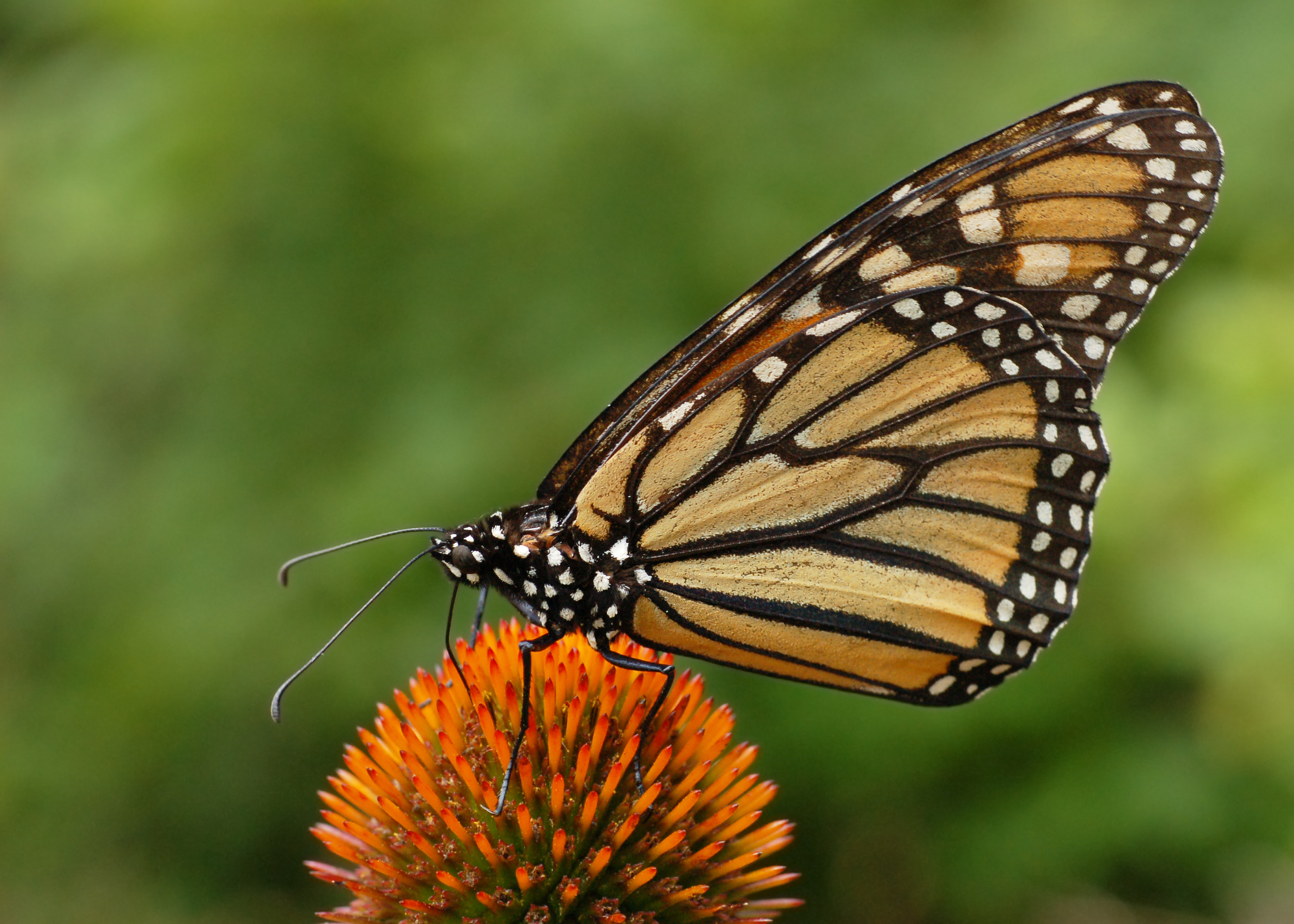
File:Monarch Butterfly Danaus plexippus on Echinacea purpurea 2800px.jpgIntroduction:
Did you know that there are no two butterflies that are exactly alike? Even if they look the same, there are still very small differences. To begin this lesson, we compared pictures of different butterflies, comparing how they are similar and how they are different. The question was posed: is one butterfly better or more special than the other because of the design on it's wings? How are you like these butterflies? 

Activity:
Pass out crayons and paper butterflies for students to decorate (link for butterfly template is at bottom of page). I encouraged them to be as unique are they are and add as many colors as they would like. I also showed them how to make the butterflies "fly" without leaving their hands, which the students LOVED! Make sure to allow time for students to share their artwork at the end of the lesson!

Song:
There is also a really cute poem that goes along with this lesson. This is a great way of getting the students to come back together after having a few minutes to color their butterflies. I changed it up just a bit to make it fit with a tune to a popular song- I'm a Little Teapot. (This is NOT my original poem, but I can not recall who to give credit to! 

I am very special I am neat (hug self)
From the top of my head to the bottom of my feet (hands on head, hands on feet)
We are all unique and that's okay (palms up, sweeping from left to right to "include class")
We're all like the butterflies (make butterfly out of hands, or make paper butterfly "fly")


Sunday, March 3, 2013

GCS Counselors Meeting notes

I found the GCS Counselor's meeting to be very interesting and thought provoking! Here are some of the main points:


  • Emotional Connections through video: The number one thing that motivates a person is having an emotional connection. By watching a video as an introduction, the students are emotionally activated and can easily relate to the video without talking about themselves. Video is the best emotional media that can be used in school. Here are some links to a few of my favorite video resources:
    • http://gcsnc.connectwithkids.com/
    • http://pbskids.org/itsmylife/video/index.html
    • http://www.mariadismondy.com/2012/10/youtube-teaches-character/
    • http://pinterest.com/jkl5502/videos-character-education/
  • Similarities, not differences: Another thought-provoking concept mentioned at this meeting is that we should not show kids how they are different from one another, we need to show them how they are the same. It is natural for kids to pick up on the differences, but when they are unable to see how they are similar to others is when kids develop empathy for others. In a world where it is becoming "cool to be cruel", having a firm foundation on empathy can be a deciding factor between kids bullying others or being kind. 

  • Extrinsic Motivation: The speaker also talked about how children today are primarily extrinsically motivated and that paradigm shift is leading to a huge increase in mental health issues in early adulthood (top 3: anxiety, depression, and narcissism). To illustrate the problem with being only extrinsically motivated, the speaker used a metaphor of leading a chicken with breadcrumbs to a certain destination. When the chicken reaches that destination, the bread crumbs stop and the chicken is left not knowing what to do or where they are at. The chicken is the child, the bread crumbs are the adults giving extrinsic rewards for doing the small things. Once the kids reach the destination (college), the breadcrumbs stop coming and they do not know what to do. This causes a lot of anxiety and depression. 


  • "Comparison is the thief of joy"- Theodore Roosevelt- One study compared the happiness of two families- one with an income of 200k, the other with 60k. The study found that in general, there was not a difference in the happiness, UNLESS they were living next to each other. Your belongings and possessions alone do not determine how happy you are, but when you start comparing what you have to what someone else has, you become unhappy. 

Monday, February 25, 2013

Individual Counseling Progress Chart


One of my goals for my second semester of my internship was to track student growth in individual sessions. To do this, I created two forms to use with the older students at school. I print out the assessment on half sheets of paper and measure the lines to exactly 10 cm.

How To Use Progress Charts:
1. Student circles current feeling
2. Student marks each line depending on how they are feeling about each area (scale between terrible and great)
3. Measure the length of the line at the point where the student marked (using a centimeter ruler).
4. On Progress Chart, write today's date on the first line at the bottom.
5.Make a dot above the line with today's date on the Progress Chart, using the appropriate color as marked at the bottom of the chart. (There should be four different colored dots for each session)
6. In future sessions, connect dots of the same color to track growth in each of the four areas.

Benefits:
The student could easily complete this so that they could see their own progress in the different areas. This also ties in some math skills during counseling! The scales can be changed to reflect the specific goals that the student is working towards. (ex. How well do you think you did with staying at your seat this week? How have your strategies worked this week?)

Since starting to use these progress charts, I have noticed another added benefit. It has become a catalyst for students who are reluctant to explain why they are having trouble. Many times students dont want to just walk in the office and tell me that they are having a problem at home. However, if they are able to show me on the scale, it opens the door for conversation right away without having to beat around the bush. I have found it helpful to simply ask "tell me about what you wrote" without giving my interpretation of how they answered the questions.

(Click on the pictures to be taken to my TPT store!)


Saturday, February 16, 2013

Simon's Hook: A Story About Teases and Put-Downs Lesson Plan Ideas

With the third graders, I did a unit on Simon's Hook. There is so much that can be done with the book! Simon's hook is a story about how to deal with teasing and put-downs. When Simon has a bad hair day and someone calls him a name, he gets very upset. Grandma Rose then tells Simon a story about how to handle teases and put-downs, from a fish's perspective. When someone teases you, they are throwing you the hook. When you get upset, you are biting onto their hook. Grandma Rose helps Simon learn how to "swim free" from the teasing hooks that people toss his way.


Youtube Videos

Grandma Rose's Neighborhood Youtube Videos: As a review of the book, or even in place of the book, show these videos to the class. Part one has the intro about how teasing is "throwing a hook". Part two is the story about how the fish learned to swim around the hooks instead of biting. Part three shows some role plays about handling teasing.
Thumbnail
Grandma Rose's Neighborhood Part 1
Thumbnail
Grandma Rose's Neighborhood Part 2

Thumbnail
Grandma Rose's Neighborhood Part 3

Which Strategy is it?

After discussing the strategies of how to avoid biting the hook, we played a little class game. I wrote each of the five strategies on the board. After another student reads the scenario, the class would show me with their hands which number they think the scenario is an example of. Below are the scenarios that I used.

Ignore
The whole class is about to play kickball. Sam says to the Dustin, “We’re gonna beat you guys!”. Dustin looks at Sam and shrugs, thinking to himself, “I really don’t care if they win”

Amy and Sara are playing checkers when Matt approaches them and says to Sara “Your mom is fat”. Amy and Sara continue to play checkers as if nothing had happened.

Agree
Patrick is telling a joke to his friends. “Knock knock!” (who’s there?) “Interrupting Cow!” (interrupting Co-) “MOO!!!”. Chris looks at Patrick without laughing and says- that was a dumb joke. Patrick says “yeah, it sure was!”

Distract
While playing dodgeball, George says “Ha ha you missed me!”. John responds by saying “what I really miss is my X-box. Man I would love to be at home playing that now!”

Laugh/joke
Josh just got finished telling a story to his friends about embarrassing himself this weekend with his family. When he was finished,  Jason said, “wow. Really? How dumb can you honestly be to think that would work!” Josh responds by saying “well, you’d be surprised just how dumb I can be sometimes”

Stay away (avoid)
Kelly started calling Sharon names on the playground. Sharon decided that she’s had enough of the name calling, so she decided to turn around and walk in the other direction from Kelly. 

Role Plays

Students were divided into groups of 4 and were assigned one of the 5 strategies. They came up with a short role play of a situation where a kid used that strategy. While presenting to the class, the other groups had to figure out which topic each of the groups had chosen. 

Game Time!

This is an activity that I saw on lifelessonsforlittleones.com. There is a ship at the top of the board that has a teasing remark, "You're a little shrimp!". There are a lot of fish cards in a pile that have responses to that statement. If the statement is one that "bites" the hook, it is place on top of the baited hook/strings. If it is a statement that helps the fish avoid the hook, they are place on the side with "Free Fish".

Take Away!


At the end of the unit, each of the students received one of these cards to remind them of what they can do to avoid "biting the hook".

Other Activities: 

  • http://www.freekidscrafts.com/handprint_fishing_pole-e1236.html Give each kid a hand cutout, fishing pole, string, and two paper fish. Have kids write a teasing comment on the pole or hand cutout. On one of the fish, write a comment that would be considered "biting" the hook. Glue this fish to the string. On the other fish, write a comment that would represent the "free" fish. 


Thursday, February 14, 2013

Diversity Lesson- The Crayon Box that Talked Lesson

I taught a lesson on diversity to a class of PK/Kindergarten students.


Introduction:
Introducing the topic, I opened a box of crayons, grabbed a handful and laid them out in front of me on the floor so that everyone could see. Next, I asked students how these crayons are different. I got the expected responses: different colors, some are longer than others, some have paper and others don't, etc. I then asked the class how the crayons are the same. One kid said that all the crayons do the same thing. Another pointed out that they are all called "crayons". I added that the crayons all go back into the same box when we were through.

Story Time!
I then read the story, "The Crayon Box That Talked" by Shane DeRolf. This is a book about a box of crayons that do not get along with each other. In the story, a girl buys the box of crayons and takes them home to draw a picture using every single one of the colors in the box. By doing this, the crayons all start to realize that they each have something to give that is different from every other crayon in the box! We talked about what it meant to be "unique" and discussed how each student in this class is unique, just like this box of crayons. We talked about a few ways that we are different from one another, and about a few ways that we are the same as everyone else. 

Activity:
To really drive this message home, I told the class that we were going to make a puzzle as a class! I created a puzzle using a file folder and numbered each of the pieces to make putting it back together easier. (Plus, the kids can practice their counting skills!) I gave each student a piece of the puzzle to decorate with crayons however they would like. The teachers also helped color a piece.

Conclusion:
Once everyone was finished, I taped all of the pieces together. Each person's unique puzzle piece came together to create this beautiful class puzzle! No two puzzle pieces are alike, just like no two kids are alike. The class now has this puzzle displayed in their classroom to remind students that they are all unique! 


(Click the images below to be taken to my Teachers Pay Teachers store and purchase this lesson!)


Sunday, February 10, 2013

National School Counseling Week

Happy National School Counseling week! Each morning we read morning announcements about how school counselors help kids succeed.(See the announcements here) The "big event" of the week, however, was a teacher and staff appreciation breakfast. After sending an email out to the teachers that morning, we went around to relieve teachers for a few minutes so they could get some breakfast. On the menu: coffee, donuts, muffins, fruit, and banana nut bread. I'd call it a success! I also decorated the table with a thank you note to the teachers and staff, and put out some "teacher jokes" on the table so teachers could be entertained ;)

Saturday, February 2, 2013

Classroom Behavior Management

At my internship, guidance was a part of the Specials rotation. One thing that I focused on was how to effectively manage the most "energetic" classes. In my Master's program, we are not taught how to manage a classroom as a school counselor. I was an Education major during my undergraduate days, but the discipline that is appropriate for a classroom teacher may not always be appropriate for a school counselor to use. This has been a growing experience for me, leading me to look for alternative ways to manage a classroom effectively. Below are some ideas that I have tried, and some ideas that I have found on Pinterest that would be easy for a school counselor to implement in a classroom.

1. Mr.Potato Head-  I have used this as a visual for whole body listening. At start of a classroom guidance
or small group lesson, discuss what ears, eyes, mouth, hands, brain (hat), and bottom should be doing, adding body parts as you discuss. If you notice that kids are not using their body appropriately during the group or class, remove that part of Mr.Potato head. Replace when you have everyone's attention again.

At the end of class, if Mr.Potato Head has all of his parts, give the class a compliment when their teacher arrives to pick them up, or another agreed upon incentive (see below). For smaller groups, you could pass around Mr.Potato Head at the end.

2. Counselor versus Students game- Draw a T-chart on the board, labeling one side "counselor" and the other side "students". When students are actively participating and using whole body listening, the class receives a point. If the counselor is waiting on students to finish conversations, or is not feeling respected by the class, the counselor receives a point. The objective is for the class to have more points than the counselor. 


3. Erasing letters of a word- Write the one-word topic of the lesson on the board at the beginning of class. If class is speaking out of turn, not following directions, or disrespecting teacher, erase a letter. The objective is to still have a part of the word left on the board at the end of class. 

4. Building a word- Similar to the erasing letters of the word, the class must work together to build the vocabulary word by showing positive behaviors. The objective is for the class to build the entire word by the end of class.

5. Bucket Fillers- Introduce this using the book, "Have You Filled a Bucket Today?". Remind the students throughout the class to think about if they are filling your bucket, and/or filling another student's bucket.

6. Peace Makers- Introduce by talking about peace. Discuss ways to make or break the peace in a classroom. Create an anchor chart with things that are "peace makers", and things that are "peace breakers". Through the lessons, remind the class to be peace-makers, not peace breakers. (Click picture for source)

7. Mystery Person-  Before each lesson, pick a Mystery Student to watch for. Do not tell the class who the mystery person is. To redirect students during the lesson say, "I wonder if my Mystery Student is on task!"  If the Mystery Student follows the “rules” they receive a reward of some kind. If the Mystery Student does not follow the rules - a brief, vague discussion is had with the whole group about what we should be working on to earn "Mystery Student". Source: Growing Kinders Blog

8. Class Bingo- Use a BINGO board for each class, and a bag with the individual spaces listed or bingo balls- (ex. B3, N5, G1). If the class is following directions and being respectful, choose a student to randomly pick a number from the bag, and color in that spot on their class BINGO board. When class gets an entire row of numbers filled in (horizontal, vertical, or diagonal) the class will receive a special reward/party.

9. Marble Jar- When you catch your class doing something really well, add a marble/pompom to the jar. The objective is for the class to fill the jar to a certain point to obtain a class incentive. 

10. Quiet Critters- Quiet Critters are Pompoms with googly eyes and felt feet. They only appear when students are being quiet. Each student receives a quiet critter when they are being quiet, but have to turn in their quiet critters if asked to stop talking. Source: Teaching Chick Blog

Counseling Classroom Incentives:
  • Game day (Teambuilding, following directions)
  • Minute to Win It games (builds on teamwork skills)
  • Feelings charades/ Onion Head cards (identify feelings, building empathy)
  • Brain Breaks for extended amount of time
  • Compliment to teacher
  • Students enter drawing for special seating during classtime
  • Pass around a puppet friend
  • Share individual stories at end of class

Tuesday, January 29, 2013

Play Therapy in Schools

I've recently had the privilege of speaking to a Counseling Children class at my university about the practical uses of play therapy in schools.Play therapy is often viewed as something that only clinical counselors can do. It's seen as being too time consuming and a poor use of a school counselor's time. These statements, however, could not be further from the truth!

Imagine that someone in an authority role came up to you and started asking you to do something in a language that you could not understand or comprehend. You most likely would not know what to say in response, and would be at a loss of what you were expected to do. Using talk therapy with children can sometimes come across this way too.

Play is a child's first language. Using play therapy allows the child to express themselves in an alternative, more comfortable way. Children learn about their world through play, and are able to manipulate their world on a smaller scale to work through their own issues. We have been taught to meet the children where they are. If they are most comfortable in speaking "play", why should we not meet them where they are?

As stated by Blanco and Ray in their article, Play Therapy in Elementary Schools: A Best Practice for Improving Academic Achievement,  “Play therapy allows child to overcome emotional limitations that were hindering expression of intelligence and released the child to demonstrate full potential (2009).” Play therapy helps kids succeed academically by helping to remove emotional barriers. 

So, how can you use play therapy as a school counselor, and still keep your sanity?? Below are some ideas!

Puppets
  • Interview puppets about child
  • Make up stories with puppets 
  • “impulsive puppy”- Classroom puppet who teaches students how use whole body listening
  • "Which puppet are you? Why?" 
  • Create your own puppets
    • Finger puppets - cut tips off cheap gloves, attach googly eyes, yarn hair, construction paper  (or felt) clothes
    • paper bag puppets- decorate with markers, lightweight materials
  • Puppet shows
    • Shy students can hide behind puppet theater
    • Have student puppeteers present to classes on important issues
    • Introduce new topics to class using puppet shows
    • Shoe box for finger puppets, trifold board or turned over table to bigger puppets
Play Dough
  • Create a feeling using dough - what does sad look like to you?
  • Make yourself from dough - what do you like about yourself? What, if anything, do you wish you could change?
  • Take out aggression- punch, squeeze, hammer, etc
  • Energy outlet while talking- gives hands something to do while mouth does the talking
Sand Tray
  • Create your world - who is in your world? what are they doing?
  • Make a story - tell me a story about a time when you ___.
  • Who do they introduce? Do they leave out anyone seemingly important? Where are objects placed in relation to one another?
  • Ask questions - why did you choose a __ for yourself? How does that make (sand tray character) feel?
  • Suggest changes (what would happen if…)
Games
  • Social skills - taking turns, patience, being a good sport, following the rules
  • Get-to know you games 
    • connect 4- for each token you drop, say one thing that you like
    • Jinga - put talking prompts on each wooden block, answer prompt as the block is chosen
    • Uno- assign color cards to prompts
Expressive Arts
  • Drawing- 
    • Draw your family doing something 
    • Family accolades- who is the happiest? is anyone sad?
    • Draw a time when you felt… 
  • Color your life- feelings assigned to color
    • ex. pizza- cheese= yellow= happiness. Pepperoni= red= Anger.
  • Zentangle- relaxation, concentration (http://www.zentangle.com/)
  • Music- give or create instruments 
    • What does sad sound like? 
    • How angry did that make you?
Other Play Techniques
  • Play house - who is there? who is not? what happens in each room, etc
  • Toss ‘n Talk ball individual or group prompts
  • toss ball while talking (great with boys)
  • Mask collage
    • outside- what you show the world
    • inside- what are you hiding from the world
  • Shared Drawing- if drawing with a child, ask what and how you should draw.  
  • Narrative (create story of life) 
    • large sheet of paper, draw big events of life, walk through and talk about each event
  • Basketball hoop in office- talk while shooting hoops! Or answer prompts to shoot the ball x number of times.

Monday, January 21, 2013

Counseling Boys


I attended a counselor training that provided a lot of great ideas for working with boys. The speaker was Michael Gurian, Founder of the Gurian Institute (http://gurianinstitute.com/). He discussed how a male's brain is very different from a female's brain. For example, when a female's brain is in a resting/bored state, about half of her brain is still active (I cant remember the exact stats...). For a male's brain in a resting/bored state, nearly his entire brain shuts down (minus what he HAS to have to survive). Obviously, it would be difficult to talk to a male student when his brain has shut down, so here are some tips to remember when working with boys:

  • Talk shoulder to shoulder instead of face to face. Allow the boy to not make eye contact with you.
  • Toss a ball while talking. Do any kind of work while moving an object through space. "Tossing a ball opens the windows of the boy's soul" -M.Gurian
  • Walk and talk
  • Talk about things in your environment. Find similarities between an object in the environment and the situation. 
  • Do not discuss a behavior incident immediately after it occurs. Try to wait several hours if possible. If you must talk to him right away, give him a few minutes of physical activity/service to do to allow him time to privately process the events. If he does not have this period of time to process the events, he may not be able to completely recall what has happened or how he felt (because of how the male brain works).
  • Have male teachers from school lead a boy's group for struggling boys. They can discuss things that a female counselor could never completely understand. The counselor could come up with a suggested group agenda if needed.(male mentors at school)
  • Use expressive arts
  • Less verbal praise for general behavior, more praise for achievements or accomplishments
  • Hang boy-friendly pictures up in the office (sports, insects, etc)
  • Have an object for the boy to squeeze while talking to you (nerf ball, playdough)
  • Give the boy responsibilities (at school and at home)
  • If completing a writing assignment, allow them to draw a picture of the topic first. This provides the much needed visual aid to help them process the written assignment.
  • This one was emphasized over and over: USE VISUALS! Group discussions should have a picture to reference. Use charts and diagrams. Give handouts. Watch video clips. Use Powerpoint presentations.
  • Set goals and objectives.
  • Ask what their father figure would say in any given situation
  • Use humor.
  • Dont try to talk to a boy while he is crying. Give him processing time

Mr.Potato Head- classroom management

Introducing: Mr.Potato Head! I have used this as a visual for whole body listening. At start of a classroom guidance or small group lesson, discuss what ears, eyes, mouth, hands, brain (hat), and bottom should be doing, adding body parts as you discuss. If you notice that kids are not using their body appropriately during the group or class, remove that part of Mr.Potato head. Replace when you have everyone's attention again. 

At the end of class, if Mr.Potato Head has all of his parts, give the class a compliment when their teacher arrives to pick them up, or another agreed upon incentive. For smaller groups, you could pass around Mr.Potato Head at the end. 

(I believe the original Mr.Potato Head classroom management strategy came from here, but please correct me if I'm wrong!)
How would you use Mr.Potato Head?


(Inspiration for Mr.Potato Head from here)

Sunday, January 20, 2013

Random Acts of Kindness Week

Random Acts of Kindness week is Feb. 11-17. My Secret Service Group will be helping me during the RAK week, as they are the experts in the field! We have decided to start off each day with morning announcements. 

Our main Random Acts of Kindness activity will be a school-wide RAK bulletin board. My Secret Service agents suggested that we decorate the bulletin board with paper people chains, so that everyone is "holding hands" and showing kindness! Their homework this weekend was to make the chains so I can staple them on the board! 

All students at the school are invited to participate in RAK week. When students complete a RAK, they will write (or draw) on a heart cut-out about what they did. The hearts will then all be posted on a bulletin board. I am excited to see the bulletin board fill up with hearts this week! I will also be adding pictures of students helping other students.


Random Acts of Kindness week morning announcements:

Monday:
Good morning! This is ____ from Ms.____’s class. This week is National Random Acts of Kindness week. We perform Random Acts of Kindness when we go beyond what is expected of us and reach out to help another person. There are three simple steps to performing a Random Act of Kindness.

  • The first step is to find out what another person needs. For example, Sally has her hands full and she needs to open the door to get to her class.
  • The second step is to think about how you would feel if you had that need. You might feel frustrated if your hands were full and you could not easily open the door by yourself.  
  • The final step to performing a Random Act of Kindness is to offer your help. Hold the door open and let Sally enter.
There are hundreds of ways to show someone that you care. This week, look for opportunities to show that you care by performing Random Acts of Kindness.
Tuesday:
Good morning! This is ____ from Ms.____’s class. Today is the second day of National Random Acts of Kindness week. Today’s message is about Kindness and empathy.  Kindness and empathy are very closely related: kindness is simply empathy in action. When we understand how someone feels and then do something about it, we are showing kindness. Even if you sometimes do not think that anyone notices when you are being kind, remember the words of the Ancient Storyteller, Aesop. “No act of Kindness, however small, will go unnoticed”.
Wednesday:
Good morning! This is ____ from Ms.____’s class. Today is the third day of National Random Acts of Kindness week. Today’s message is about showing appreciation to those who help you. Appreciation is when you are thankful for what someone else has done for you. Do you have a friend that you can always depend on? Has one of your teachers taken the extra time to help you learn something new? Try to find the time today to say thank you to the people who mean the most to you. Remember: a simple “thank you” can go a long way!
Thursday:
Good morning! This is ____ from Ms.____’s class. Today is the fourth day of National Random Acts of Kindness week. Today’s message is about making and keeping friends. One study found that children who performed Random Acts of Kindness felt more accepted by their classmates, and had more friends than the children who did not perform Random Acts of Kindness. When you are kind to others, more people want to be around you.  Being kind to others is one of the best ways to make and keep friends! How will you show kindness to kids in your class today?
 (adapted from: National Public Radio)
Friday:
Good morning! This is ____ from Ms.____’s class. Today is the final day of National Random Acts of Kindness week. Today’s message is about passing kindness on.  When we do kind things for people, they feel so good about what we did that they often do kind acts for others. As kindness is passed on from one person to another, an outward ripple effect is created, like a raindrop that falls into water.  In this way, one Random Act of Kindness can be passed on and on, bringing happiness to many others. Anthropologist Margaret Mead once said, “Never believe that a few caring people can’t change the world. For, indeed, that’s all who ever have.” Thanks to all the students and staff for helping to make this a great week. Now let’s all work together to pass the kindness on throughout our school and into our community.
(adapted from: Randomactsofkindness.org)


Other runner-up ideas for RAK week:


  • Bulletin board in the main hallway for teachers, parents, and students to write a note to someone who has made their day, or to thank someone for what they have done. Pens would be attached to the bulletin board so people could write something when passing through.
  • Valentines Day theme: get the whole school involved by having all students write on a heart diecut any time they see someone performing a RAK. Put the hearts up on the board. My Secret Service group had the idea of creating a border for the bulletin board by making and decorating paper chain people holding hands. 
  • Morning announcements with a positive quote to start the day
  • Graffiti positive quotes on the sidewalks with sidewalk chalk  
  • Mirrorless Monday - promoting self-esteem. Be kind to yourself.
  • Pay it Forward (starting with a few people doing RAK's, watching it spread through the school. Haven't worked out the kinks yet. Please let me know if you have a similar idea!)
  • RAK board- all students have the option of participating in. For the entire week, students will try to complete every activity on their board, and turn in their completed board to their teacher at the end of the week.