Search This Blog

Showing posts with label advocacy. Show all posts

Tuesday, June 24, 2014

Student Mentor Program

I have recently designed a new program that I am excited about implementing! It's a Student Mentor Program, in which carefully selected older and more responsible students are trained to mentor younger students who may be struggling with social, academic, or behavioral concerns. Similar to "Peer Mediators" or "Peer Helpers", the Student Mentors will help the counselor reach even more students and create a lasting impact on  the school environment.

Who??
The program would work great with elementary or middle school, but could also easily be adapted to high school. Alternatively, if you have different level schools nearby, arrange it to have high school students mentor middle school students.

Mentors would be responsible role model students who apply (and interview!) for the position of mentor. They would meet regularly with the School Counselor for quick individual check-ins and for after school group trainings. They will be taught how to help younger students manage conflicts, handle strong emotions, and provide general encouragement and friendship.

Mentees would be students who are "frequent flyers" in the counselor's and/or pricipal's office. The may need additional support outside of what the caring adults in the school can provide. An example of the ideal mentee is one who is constantly asking to speak to the school counselor about little problems, or one who is trying to fit in with their peers. To these students, their mentor will be an older friend who they get to hang out with and talk to once a week.

What?
Student mentors will be trained in being a mentor. They will receive explicit instruction on how to encourage and lead a younger student, and how to help with many problems that they face. In a way, mentors will be "Counselor Helpers" or "Peer Helpers". When the counselor's schedule is packed (like it always is), student mentors can help younger students with some of the small problems that they face, while becoming expert problem solvers themselves!

When and where?
I see this being a year-long program. Mentors should meet with their mentee once per week for 20-30 minutes, during non-instructional time. Training would take place at least once per month after school, when all mentors are able to attend. Mentors would also check in periodically with the counselor (5-10 minutes, before or after school) so that the counselor can monitor their progress and answer any questions they have.

Why?
Let's face it- School Counselors are BUSY!! This mentor program is a way that you as a school counselor can impact even more students. You teach mentors how to help, and start the snowball effect of students helping students. Soon enough, your entire school will feel the impact! There have been many studies done about the effects of mentoring on student achievement, but unfortunately there is a lack of willing {adult} mentors in our community. But who says mentors can't be children too?

 
(Get this poster FREE here)

Suggested steps to implement program:
  1. .    Inform teachers of the mentoring program at a staff meeting. Explain the potential benefits for mentors and for mentees, and how it will impact the school as a whole.
  2. .    Class introduction lesson. Meet with classes of older students to discuss the mentoring program. Emphasize the amount of responsibility and dedication that being a mentor will require. Leave information and copies of the Mentor Application with teacher. Teacher will give applications to students who are interested, as well as the parent information sheet. (Another possible route is to open the applications up to your student council or other student leadership groups, or simply ask teacher for recommendations and ask those specific students if they are interested)
  3. .    Once students turn in complete applications, meet with those students individually or in a small group (lunch bunch). Discuss overall objective of the program, specific requirements, and answer any questions they may have.
  4. .    Meet with possible mentees, explaining what their mentor will be doing with them. Give mentees pre-assessment. Mentees should be students in younger grades who need additional support, but do not typically have big problems or concerns. Check with parents of mentees before initiating mentoring.
  5. .    Schedule after-school training session to go over additional details of the program. (See list below of suggested training items) Give out pre-assessments to all mentors.
  6. .    Pair up mentors with mentees.
  7. .    Meet regularly with mentors to discuss progress (before school check-ins or during lunch) 

Suggested Trainings: At each training, include a handout for students to keep in their notebook for reference. I would suggest doing an interactive notes style handout to further engage the students.
  •       What specifically is expected of mentors (What is a mentor? How can I help?)
  •       How to conduct a peer mediation session
  •       Promoting empathy and kindness in others
  •       Strategies for handling anger, sadness, stress
  •       Strategies for solving "small problems"
  •       What is effective communication?
  •       What to do if… (reporting "big" problems, what if you're not sure what to say?, etc)

Other fun mentor program ideas
  •       Have a "Mentor Night" or "Mentor Fair" at the end of the school year where student mentors present information on their impact with younger students. Have students create trifold poster with what they have learned from the program, how they helped their mentees, and the overall impact of the mentoring program on the school. For maximum participation, hold the event during a PTA night or in conjunction with other big school events (talent show, science fair, etc)
  •       Create matching T-shirts or bags for mentees (Vistaprint!)
  •       Give out certificates for participation in the Mentor program at Honor Roll ceremony.


If you are interested in starting a Student Mentoring Program at your school, check out my Student Mentor Program Pack on Teachers Pay Teachers! It includes information sheets, application, Mentor Notebook pages, assessments, and four training lessons. 
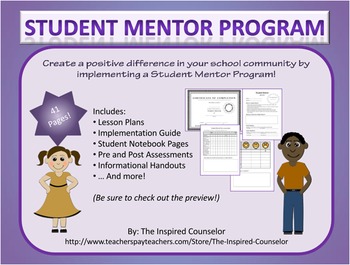
Student Mentor Program

Finally, if you have started a Student Mentoring Program at your school, I'd love to hear how it is going and any suggestions that you have for the program!

Thursday, March 20, 2014

The Tutoring Counselor

After finishing my Master's degree in School Counseling, I decided to revisit my passion for tutoring kids. I had tutored for 3-4 years while completing my Bachelor's degree and into my first year of my Master's program, but I realized that I needed to take a break in order to put all of my energy into grad school. After I graduated and started tutoring again, I realized that my School Counseling training had GREATLY influenced my tutoring style! I knew that I could never go back to just being a tutor. Below are some of the many things that I have learned from combining my passion for counseling with my love for teaching:

1. Children don't care how much you know until they know how much you care! 

You can teach a child until you're blue in the face, but unless you show them that you care about THEM and not just their academic performance, you will have wasted your time. I used to just jump right in and start teaching my students what I thought they needed to learn. When I reflect back on my grade school days, I can't tell you anything about what specific teachers taught me. But I can tell you about how they impacted me as an individual. I can tell you the ones who encouraged me to keep trying even if I didn't get it the first time. I can tell you the ones who pushed me to go even further than I thought I could and wouldn't let me settle for less than my very best. I like to start each tutoring session with a very quick check-in. (How was your day/week on scale of 0-10.) I've learned that students can not and will not focus as much on academics if another area of their life is consuming their energy. Taking just 5 minutes to discuss the argument they just had with a friend could help the remainder of the hour be much more efficient. Also, as a tutor I look for every opportunity to get to know my students better, and to incorporate their interests into tutoring!

2. You CAN tie in social skills and character education when teaching students!

I recently found out that one of my tutoring students, a sixth grade boy, was getting bullied at school. At this point, the school counselor in me came roaring out, and I was mad that I couldn't be at the kid's school to do something about it! However, I did have this student for the next hour, and I could give him some tools for handling this situation even if I'm not at his school. This particular boy is very bubbly and always energetic, so we never have a dull moment in tutoring! Since we are working on reading skills, I brought out one of my books on dealing with bullies (Confessions of a Former Bully- my favorite bullying book!). I will try to post the activities that I did with him soon!

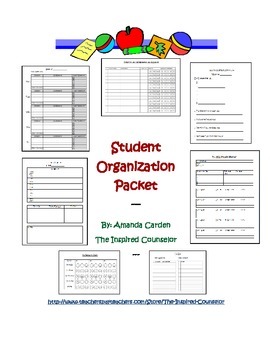
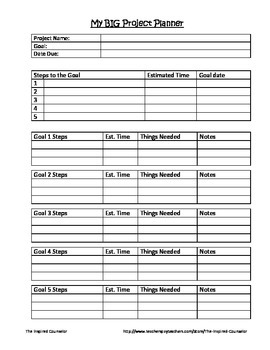
Another student I am working with is a 5th grade girl who struggles with self-concept and responsibility. I have worked closely with her to help her with organization skills. She, like many kids, wants to put big projects off until the very last minute, which usually results in a late night cram session and quite a few tears shed. I designed a "Big Project Planner" to help her break down big projects into smaller tasks to work on each day. I am also starting her on a "progress card" for her to take responsibility for certain behaviors and attitudes that she has.  Also, to help her increase her self-concept, I am teaming up with her teachers and parents to really bring out her strengths and make a point to tell her any strength that I see in her.

(Click on the pictures to be taken to my TPT store!)
My BIG Project PlannerStudent Organization Packet

3. Learning does NOT have to be boring and should NEVER be boring!

Worksheets can be a time saver for teachers, but they can be a time waster for students. I DO NOT like to use worksheets and avoid them at all costs! For homework, worksheets can be a great tool to review materials independently, but when working with  a teacher I believe it's best NOT to use them. When I'm tutoring, I will create fun games to teach and review topics. For example when completing math problems or reading sight words, I might pull out a Tic-Tac-Toe board or a Connect 4 board. For each problem answered, they get to have a turn. I also have file-folder game boards, PowerPoint games, and even basketball games (using my indoor hoop). When students are having fun, they are learning. With my more creative and artistic students, I will sometimes have them create a Lapbook of the concept we are discussing.

Below are a few games and activities that I have posted on my TPT store:
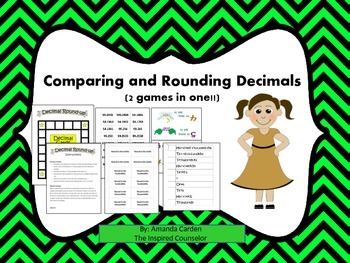
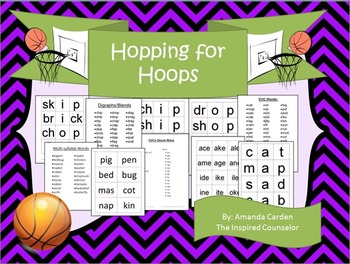
Comparing and Rounding Decimals Games Hopping for Hoops- Decoding Activity
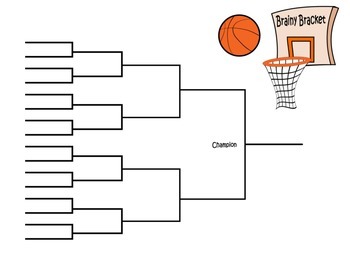
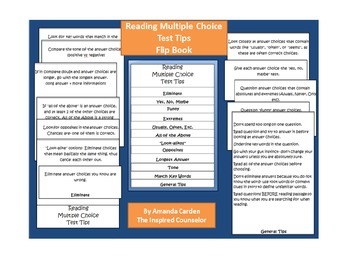
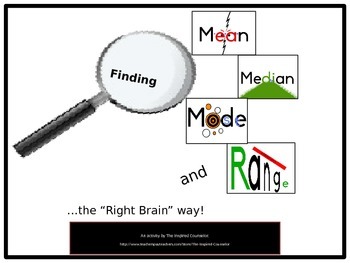
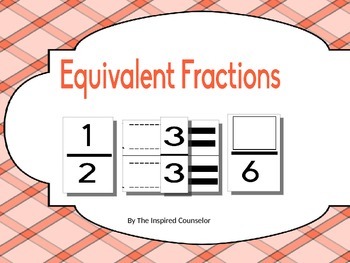
Brainy Bracket: A March Madness game for multiple subjects!Reading Multiple Choice Test Tips for Flipbook"Right-Brain" Mean, Median, Mode, and RangeEquivalent Fractions Hands-On Activity
4. There's more to learning than just learning. 

I sometimes ask my students what they think about different subjects, like reading for example. One student would always say that he HATES reading. The counselor in me then gets him to reframe that "garbage" thought into a "recycled" though. Instead of saying "I hate it", they can say "It's hard for me but I am learning." Often times, students come to see their academic difficulties as a direct reflection of their value as a person. I want my students to know that there is more than just academic success, and I will make a point to describe several of the student's strengths. We might have a conversation about why it is important to learn XYZ, and how it will help them in the future if they learn it now.

Now that I am seeing tutoring through the counseling lens, counseling opportunities with my students are popping up all over the place! Sure, I mainly tutor reading and math, but I also teach self-esteem, self-worth, and self-discipline. I use Solution Focused therapy and CBT on a regular basis during tutoring. I work with families on the best way to support their child. I may not have a school to counsel at yet, but I sure am using my school counseling skills when I am tutoring! Once I do get a school counseling job, I will be able to further incorporate academics into everything that I do with my students.

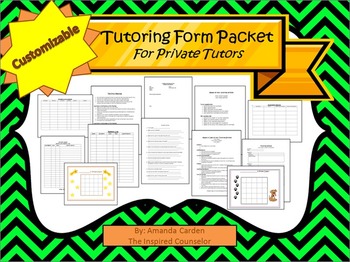
If you are interested in becoming a tutor, 
check out my Tutoring Forms Pack from my Teachers Pay Teachers Store! 
Tutoring Forms Packet for Private Tutors

Thursday, August 22, 2013

Never Ending Cards

Every so often, I see things or hear of things that get my wheels turning in my head. I read about a "Never Ending Card" on Dawn's Stamping Thoughts blog and just had to try to make one! It took me about a hundred attempts to get the folding and cutting right, but it was definitely worth the effort because now I'm in love with these cards!  There is a great tutorial on her website- I'm not even going to try to explain how it's done!

Meet the Counselor Cards

After mastering the art of folding never ending cards, I started thinking about how a school counselor could use something like this. One thought was doing a "meet the counselor" card. I wanted to include some information about what the counselor is there for, and important information kids need to know. I'll need to go back and work on the wording and put a bit more effort into the graphics, but it's a start.


Free Template!!
I created a template on Microsoft Publisher and put in some pictures and text about school counselors. I'm not going to lie- it took some time to get everything right in the template! Feel free to use this template to create your own never ending cards! Just follow the folding directions from the blog I mentioned earlier.


Other Possibilities
  • Calm-Down skills
  • Problem solving
  • Affirmations
  • Information for teachers
  • Mini books/ social stories
What else would you use the Never Ending Cards for??

Sunday, February 10, 2013

National School Counseling Week

Happy National School Counseling week! Each morning we read morning announcements about how school counselors help kids succeed.(See the announcements here) The "big event" of the week, however, was a teacher and staff appreciation breakfast. After sending an email out to the teachers that morning, we went around to relieve teachers for a few minutes so they could get some breakfast. On the menu: coffee, donuts, muffins, fruit, and banana nut bread. I'd call it a success! I also decorated the table with a thank you note to the teachers and staff, and put out some "teacher jokes" on the table so teachers could be entertained ;)