Search This Blog

Showing posts with label arts. Show all posts

Thursday, August 22, 2013

Origami Group

After learning about how to make Never Ending Cards, I started thinking about what kids could learn from folding paper. Turns out there is quite a bit that can be learned by making a few folds in a sheet of paper! Below are just a few of the benefits that students would gain from learning Origami.

Academic
  • Shapes (Identifying basic shapes, new shapes made from folding)
  • Symmetry (Much of Origami is symmetric)
  • Angles (You had a right angle, but folded it in half. Now how many degrees is the angle?)
  • Fractions (You just folded this paper in half three times. How many sections do you have?)
  • Following Directions (Some instructions for making Origami can be very specific and detailed.) 
  • Reading with a purpose (For an added challenge, only provide step-by-step instructions and no pictures)
Personal/Social
  • Teaches patience and concentration through attention to detail
  • Teaches perseverence- if they get frustrated with a project, keep trying
  • Making mistakes is a part of the learning process
  • Problem Solving skills- How can you fix your mistakes/ "happy accidents"
  • Gives students a positive hobby/ skill that can be shared with others
  • Gives an outlet for ADHD energy and fiddling
  • Kids can share their hobby through making gifts for others (encourage Random Acts of Kindness!!)
Career
  • Learning how to create a 3D object out of a flat sheet of paper = foundation of Science, Technology, Engineering and Math (STEM)
  • Students learn to pick up on and apply patterns from folding to other subjects and careers 
Origami Group
I have not yet run an origami group, but it's definitely on my list of groups I'd like to run! I would gear it to 3rd grade and up. Each week, we would focus on a different topic such as having patience, making mistakes, following directions, etc. I would also have them create at least one project each week. I might even throw a challenge at them to deconstruct and recreate a completed origami project. They could make origami to sell as a school fundraiser, or lead a school wide service project making origami for Sandy Hook.

Classroom Guidance Lesson

Using the book, Spread Your Wings and Fly by Mary Saunders, have students fold along with the story in the book as you read. Here is the book description from Amazon.com: An Origami Fold and Tell...the ancient Japanese art of origami provides a framework for enhancing self-esteem and achieving spiritual attunement that will stay with readers as they work through the book, as well as the various phases of their lives.

Sadako and the Thousand Paper Cranes: Here is the book description from amazon: Born in Hiroshima in 1943, Sadako was the star of her school's running team, until the dizzy spells started and she was forced to face the hardest race of her life-the race against time.

Empowering Kids 
I would like to leave you with one final note- a direct quote from an article on Enso Journey: The Power of Origami: How it can make you a better person: (I definitely encourage you to read this article!)

"I created something out of nothing. From a simple piece of paper, a new creature was born. For each new piece I made, I felt I had the power to change the world. I could do anything, even if I had nothing to begin with, I could do it."

Never Ending Cards

Every so often, I see things or hear of things that get my wheels turning in my head. I read about a "Never Ending Card" on Dawn's Stamping Thoughts blog and just had to try to make one! It took me about a hundred attempts to get the folding and cutting right, but it was definitely worth the effort because now I'm in love with these cards!  There is a great tutorial on her website- I'm not even going to try to explain how it's done!

Meet the Counselor Cards

After mastering the art of folding never ending cards, I started thinking about how a school counselor could use something like this. One thought was doing a "meet the counselor" card. I wanted to include some information about what the counselor is there for, and important information kids need to know. I'll need to go back and work on the wording and put a bit more effort into the graphics, but it's a start.


Free Template!!
I created a template on Microsoft Publisher and put in some pictures and text about school counselors. I'm not going to lie- it took some time to get everything right in the template! Feel free to use this template to create your own never ending cards! Just follow the folding directions from the blog I mentioned earlier.


Other Possibilities
  • Calm-Down skills
  • Problem solving
  • Affirmations
  • Information for teachers
  • Mini books/ social stories
What else would you use the Never Ending Cards for??

Saturday, April 27, 2013

End of the Year Closure Lessons

This week was very bitter sweet for me, though more sweet than bitter! I have now finished my school counseling internship and will be graduating in just two weeks! This week consisted of tying up some loose ends with individual students and saying my good-byes to groups and classes. Below are some of the closing/termination activities that I did with my students, and some that I didn't do but wanted to share anyways. I hope you enjoy!

Individual

  • Paper Finger Puppets- Found on the blog Seven Thirty Three, I taught some of my younger students how to make these very simple puppets. A lot of my individual work with the younger students has involved puppets. As a final individual session, we both made a paper finger puppet and used it to say goodbye. The students absolutely LOVED it! And it gave them something to take with them to remind them of our time together. 
  • Writing notes- Before I left for the year, I wrote several of the students personalized notes emphasizing their growth over the school year, and included some empowering words to encourage them to continue to work towards their goals. 
  • Bridge- Have the student draw a bridge in the middle of a sheet of paper. One one side is where the student used to be, and on the other is where he is now. Under the bridge- what obstacles did you have to overcome? This can also be done with two bridges, with the last one being where you would like to be, and what obstacles you might have to overcome to get there. This activity can be used at the beginning of counseling as well to give direction to the sessions. 
  • Letters to the past/future you-Have the student write a letter to him/herself in the past or the future. If you could time travel to the past/future what would you tell yourself?
  • Lines of Feelings. Ask the student to draw a line that represents their feelings over the past (year, month, week, etc). All of the lines will vary, but usually the jagged or rough lines in red or orange are used to signify anger or discontent, and the smooth, flowing lines in blues and greens are usually used to show calmness and contentment. After the lines are drawn, the student can expand on them by writing about what the lines represent, how it feels to draw them, or to whom or what they are directed.  

Groups
  • Flower Petals- The flower represents the group growing over time. A flower starts as a bud, and you can not see the petals yet. But over time, with water and sun, the petals begin to unfold, creating a beautiful flower. Place a circle in the center of the group, and tell them that this represents the bud, before group began. There were many things that you know now that you didnt know before. Give each student a paper flower petal, and say one thing that they have learned from the group. Have the student symbolically tape the flower petal to the circle. Continue until everyone has done this. 
  • String tying- From Diane Senn's book Creative Approaches to Counseling Individual Children. I used this at the end of my fourth grade girls friendship group to help remind the girls that it is okay to ask for help when they have problems, and that your friends are often a great source of help. Start by giving each girl a string that is at least one foot long. Tell them to tie a knot in a string. This is pretty simple for them to do. Some problems are easy to handle yourself. Then, instruct them to hold both ends of the string without letting go and tie a knot. Tell them that it is okay to ask for help. After letting them try for a few minutes, ask them if they would like some help. Ask one student to cross her arms, then hand her the ends of the string in each of her hands. Have her unfold her arms without letting go of the string, and a knot will be tied in the string. Allow the girls to help one another with this. Tell the girls that sometimes we have problems that we are not sure how to fix, and it is okay to ask someone else for help, and sometimes it takes a creative solution to solve their problems. Friends help us get through some of the tough problems we have, but when friends cant help, your school counselor is still there for you. 
  • Choose a Picture- Print out a variety of different pictures, such as animals, scenery, symbolic pictures, people, etc that represent a variety of emotions and different points of view- both positive and negative. Lay the pictures out on the floor and ask students to choose the picture that shows how they feel, what they will take away from the experience/group. Process what the picture chosen means to each individual. This site does a great job of explaining this method of closure. 
  • Group Puzzle/Mandala- Give each student a piece of the puzzle or a piece of the mandala and let each student decorate it. At the end, let each student symbolically place their puzzle piece or mandala piece back into the puzzle, saying one thing that they have enjoyed or have learned during the group. Allow students to keep the finished product in their class to remember the good times together.
Classroom
  • The Giving Tree- I wanted to incorporate a finger-print tree into the lesson somehow, and my supervisor suggested I use the The Giving Tree with it. That got my wheels turning! I used the book with first grade and up, adjusting the lesson slightly to accommodate for developmental differences. Before reading the book, I asked the students to be thinking about who they can relate to more- the tree or the boy. I then read the book to the class without stopping for inserting my own interpretation of what was going on. After I read the book, I asked them again who thinks they are more like the tree or more like the boy. In most classes it was about half and half. I let a few students explain why they thought they were more like one or the other. Then I told them that sometimes I feel like both. I feel like the tree because as a counselor, I will gladly give my students anything and everything that I have to help them when they need it. But at times, I have felt like the boy, and the students were the tree. In the same way that the boy got what he needed every time he asked for it, I got what I needed to become a school counselor from the students. I told them that they have taught me so much more than I have taught them this year, and thanked them for helping me learn how to be a school counselor. At the end of the lesson, I let each student come up and put a finger print on the tree, using a washable marker. (In later classes I decided to just have them write their names on the branches in different colors). I then wrote a note to the class and gave it back to them to keep in their classroom to remember our time together, and to remember that it's okay to be like the tree AND like the boy. 
  • Toss 'n Talk ball- For some classes, the students had many questions for me about why I am leaving and what I would be doing after I'm gone. After answering a few questions, I got out a inflatable ball and asked students what their favorite memory with me was this year, in 2-3 words. I used the ball as a talking tool- only the person who has the ball can talk. I gave each student a turn to catch the ball and say a favorite memory. 
  • Class Rap- I did not do this one, but it was my back up. The students are finishing up a poetry unit, so to incorporate this, I was going to have the students write a haiku about what they will take away from our time together this year. After they wrote the poems, we would all sit in a circle. Depending on the age and ability, I would divide the class into 2-4 groups, and give each group a rhythm to clap to a given beat, and maybe even having a student being our "beatboxer" to be our percussion. Then one at a time, students would read their poems in rhythm with the class's beat. 
  • Empowering Words- Adapted from Kellybear.com-  Close the year out with some positive and encouraging words! Have students think about some thoughts that help them feel better when they are feeling sad.This is called positive self-talk. Brainstorm thoughts that can help on the board. After the class is brainstormed out, have them choose one statement that is meaningful to them and draw a picture about it. Allow time to share. Remind kids that even though they may feel sad about things (such as a teacher/counselor intern leaving them, or something else sad), they have the power to control their thoughts and can think about these things to make them feel better. Leave with encouraging words challenging them to be their best! (These positive self-statements could make a nice end-of-year bulletin board!)
  • Paper Quilt- have each student draw their favorite memory from the year on a square sheet of paper. Tape the pictures together, or put into a gallon-bag quilt format to display, like the one here


Tuesday, March 5, 2013

Butterfly Diversity PK/K Lesson


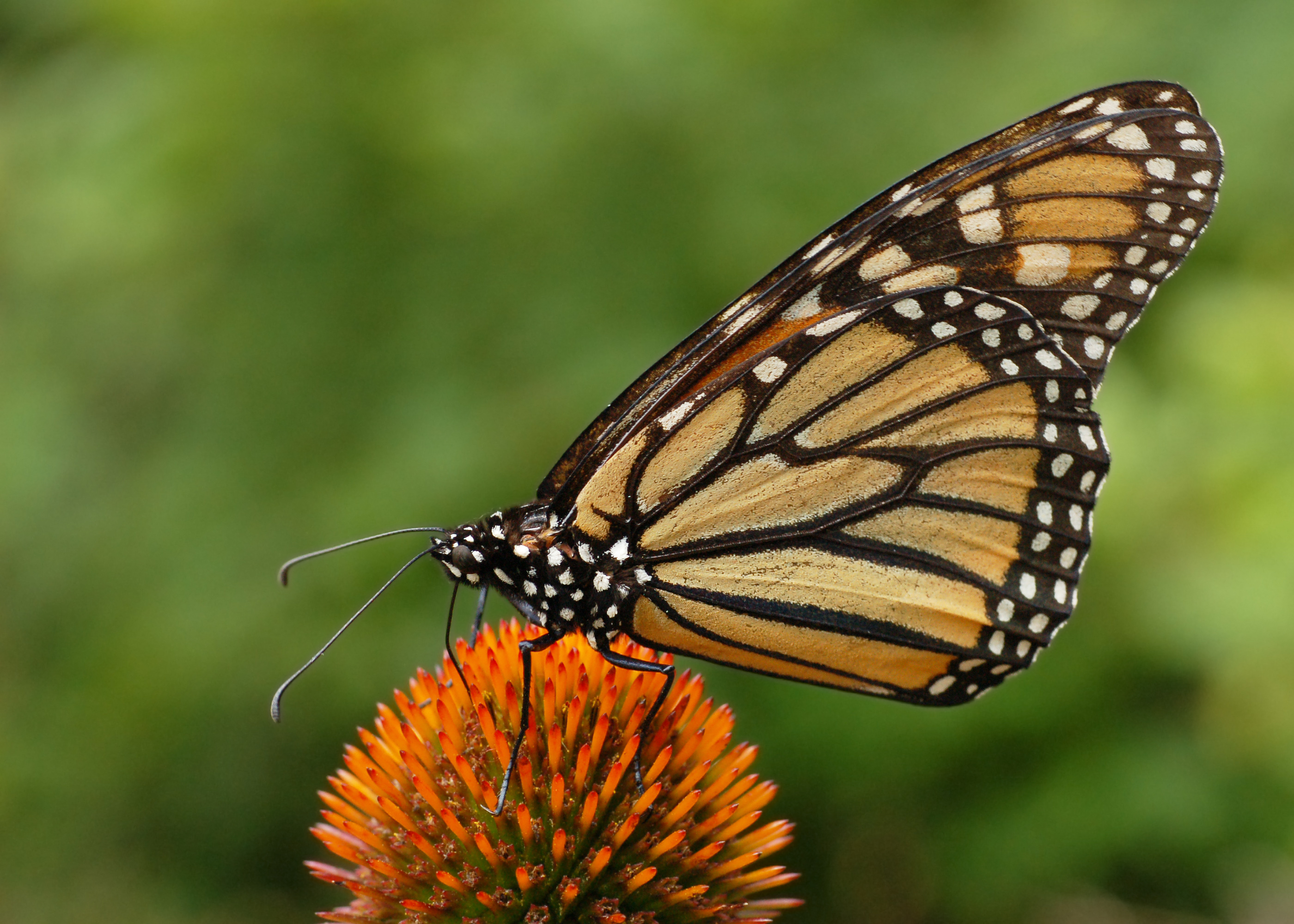
File:Monarch Butterfly Danaus plexippus on Echinacea purpurea 2800px.jpgIntroduction:
Did you know that there are no two butterflies that are exactly alike? Even if they look the same, there are still very small differences. To begin this lesson, we compared pictures of different butterflies, comparing how they are similar and how they are different. The question was posed: is one butterfly better or more special than the other because of the design on it's wings? How are you like these butterflies? 

Activity:
Pass out crayons and paper butterflies for students to decorate (link for butterfly template is at bottom of page). I encouraged them to be as unique are they are and add as many colors as they would like. I also showed them how to make the butterflies "fly" without leaving their hands, which the students LOVED! Make sure to allow time for students to share their artwork at the end of the lesson!

Song:
There is also a really cute poem that goes along with this lesson. This is a great way of getting the students to come back together after having a few minutes to color their butterflies. I changed it up just a bit to make it fit with a tune to a popular song- I'm a Little Teapot. (This is NOT my original poem, but I can not recall who to give credit to! 

I am very special I am neat (hug self)
From the top of my head to the bottom of my feet (hands on head, hands on feet)
We are all unique and that's okay (palms up, sweeping from left to right to "include class")
We're all like the butterflies (make butterfly out of hands, or make paper butterfly "fly")


Saturday, February 16, 2013

Simon's Hook: A Story About Teases and Put-Downs Lesson Plan Ideas

With the third graders, I did a unit on Simon's Hook. There is so much that can be done with the book! Simon's hook is a story about how to deal with teasing and put-downs. When Simon has a bad hair day and someone calls him a name, he gets very upset. Grandma Rose then tells Simon a story about how to handle teases and put-downs, from a fish's perspective. When someone teases you, they are throwing you the hook. When you get upset, you are biting onto their hook. Grandma Rose helps Simon learn how to "swim free" from the teasing hooks that people toss his way.


Youtube Videos

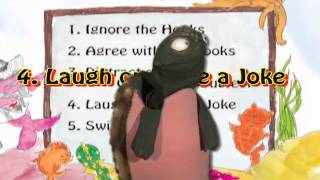
Grandma Rose's Neighborhood Youtube Videos: As a review of the book, or even in place of the book, show these videos to the class. Part one has the intro about how teasing is "throwing a hook". Part two is the story about how the fish learned to swim around the hooks instead of biting. Part three shows some role plays about handling teasing.
Thumbnail
Grandma Rose's Neighborhood Part 1
Thumbnail
Grandma Rose's Neighborhood Part 2

Thumbnail
Grandma Rose's Neighborhood Part 3

Which Strategy is it?

After discussing the strategies of how to avoid biting the hook, we played a little class game. I wrote each of the five strategies on the board. After another student reads the scenario, the class would show me with their hands which number they think the scenario is an example of. Below are the scenarios that I used.

Ignore
The whole class is about to play kickball. Sam says to the Dustin, “We’re gonna beat you guys!”. Dustin looks at Sam and shrugs, thinking to himself, “I really don’t care if they win”

Amy and Sara are playing checkers when Matt approaches them and says to Sara “Your mom is fat”. Amy and Sara continue to play checkers as if nothing had happened.

Agree
Patrick is telling a joke to his friends. “Knock knock!” (who’s there?) “Interrupting Cow!” (interrupting Co-) “MOO!!!”. Chris looks at Patrick without laughing and says- that was a dumb joke. Patrick says “yeah, it sure was!”

Distract
While playing dodgeball, George says “Ha ha you missed me!”. John responds by saying “what I really miss is my X-box. Man I would love to be at home playing that now!”

Laugh/joke
Josh just got finished telling a story to his friends about embarrassing himself this weekend with his family. When he was finished,  Jason said, “wow. Really? How dumb can you honestly be to think that would work!” Josh responds by saying “well, you’d be surprised just how dumb I can be sometimes”

Stay away (avoid)
Kelly started calling Sharon names on the playground. Sharon decided that she’s had enough of the name calling, so she decided to turn around and walk in the other direction from Kelly. 

Role Plays

Students were divided into groups of 4 and were assigned one of the 5 strategies. They came up with a short role play of a situation where a kid used that strategy. While presenting to the class, the other groups had to figure out which topic each of the groups had chosen. 

Game Time!

This is an activity that I saw on lifelessonsforlittleones.com. There is a ship at the top of the board that has a teasing remark, "You're a little shrimp!". There are a lot of fish cards in a pile that have responses to that statement. If the statement is one that "bites" the hook, it is place on top of the baited hook/strings. If it is a statement that helps the fish avoid the hook, they are place on the side with "Free Fish".

Take Away!


At the end of the unit, each of the students received one of these cards to remind them of what they can do to avoid "biting the hook".

Other Activities: 

  • http://www.freekidscrafts.com/handprint_fishing_pole-e1236.html Give each kid a hand cutout, fishing pole, string, and two paper fish. Have kids write a teasing comment on the pole or hand cutout. On one of the fish, write a comment that would be considered "biting" the hook. Glue this fish to the string. On the other fish, write a comment that would represent the "free" fish. 


Thursday, February 14, 2013

Diversity Lesson- The Crayon Box that Talked Lesson

I taught a lesson on diversity to a class of PK/Kindergarten students.


Introduction:
Introducing the topic, I opened a box of crayons, grabbed a handful and laid them out in front of me on the floor so that everyone could see. Next, I asked students how these crayons are different. I got the expected responses: different colors, some are longer than others, some have paper and others don't, etc. I then asked the class how the crayons are the same. One kid said that all the crayons do the same thing. Another pointed out that they are all called "crayons". I added that the crayons all go back into the same box when we were through.

Story Time!
I then read the story, "The Crayon Box That Talked" by Shane DeRolf. This is a book about a box of crayons that do not get along with each other. In the story, a girl buys the box of crayons and takes them home to draw a picture using every single one of the colors in the box. By doing this, the crayons all start to realize that they each have something to give that is different from every other crayon in the box! We talked about what it meant to be "unique" and discussed how each student in this class is unique, just like this box of crayons. We talked about a few ways that we are different from one another, and about a few ways that we are the same as everyone else. 

Activity:
To really drive this message home, I told the class that we were going to make a puzzle as a class! I created a puzzle using a file folder and numbered each of the pieces to make putting it back together easier. (Plus, the kids can practice their counting skills!) I gave each student a piece of the puzzle to decorate with crayons however they would like. The teachers also helped color a piece.

Conclusion:
Once everyone was finished, I taped all of the pieces together. Each person's unique puzzle piece came together to create this beautiful class puzzle! No two puzzle pieces are alike, just like no two kids are alike. The class now has this puzzle displayed in their classroom to remind students that they are all unique! 


(Click the images below to be taken to my Teachers Pay Teachers store and purchase this lesson!)


Tuesday, January 29, 2013

Play Therapy in Schools

I've recently had the privilege of speaking to a Counseling Children class at my university about the practical uses of play therapy in schools.Play therapy is often viewed as something that only clinical counselors can do. It's seen as being too time consuming and a poor use of a school counselor's time. These statements, however, could not be further from the truth!

Imagine that someone in an authority role came up to you and started asking you to do something in a language that you could not understand or comprehend. You most likely would not know what to say in response, and would be at a loss of what you were expected to do. Using talk therapy with children can sometimes come across this way too.

Play is a child's first language. Using play therapy allows the child to express themselves in an alternative, more comfortable way. Children learn about their world through play, and are able to manipulate their world on a smaller scale to work through their own issues. We have been taught to meet the children where they are. If they are most comfortable in speaking "play", why should we not meet them where they are?

As stated by Blanco and Ray in their article, Play Therapy in Elementary Schools: A Best Practice for Improving Academic Achievement,  “Play therapy allows child to overcome emotional limitations that were hindering expression of intelligence and released the child to demonstrate full potential (2009).” Play therapy helps kids succeed academically by helping to remove emotional barriers. 

So, how can you use play therapy as a school counselor, and still keep your sanity?? Below are some ideas!

Puppets
  • Interview puppets about child
  • Make up stories with puppets 
  • “impulsive puppy”- Classroom puppet who teaches students how use whole body listening
  • "Which puppet are you? Why?" 
  • Create your own puppets
    • Finger puppets - cut tips off cheap gloves, attach googly eyes, yarn hair, construction paper  (or felt) clothes
    • paper bag puppets- decorate with markers, lightweight materials
  • Puppet shows
    • Shy students can hide behind puppet theater
    • Have student puppeteers present to classes on important issues
    • Introduce new topics to class using puppet shows
    • Shoe box for finger puppets, trifold board or turned over table to bigger puppets
Play Dough
  • Create a feeling using dough - what does sad look like to you?
  • Make yourself from dough - what do you like about yourself? What, if anything, do you wish you could change?
  • Take out aggression- punch, squeeze, hammer, etc
  • Energy outlet while talking- gives hands something to do while mouth does the talking
Sand Tray
  • Create your world - who is in your world? what are they doing?
  • Make a story - tell me a story about a time when you ___.
  • Who do they introduce? Do they leave out anyone seemingly important? Where are objects placed in relation to one another?
  • Ask questions - why did you choose a __ for yourself? How does that make (sand tray character) feel?
  • Suggest changes (what would happen if…)
Games
  • Social skills - taking turns, patience, being a good sport, following the rules
  • Get-to know you games 
    • connect 4- for each token you drop, say one thing that you like
    • Jinga - put talking prompts on each wooden block, answer prompt as the block is chosen
    • Uno- assign color cards to prompts
Expressive Arts
  • Drawing- 
    • Draw your family doing something 
    • Family accolades- who is the happiest? is anyone sad?
    • Draw a time when you felt… 
  • Color your life- feelings assigned to color
    • ex. pizza- cheese= yellow= happiness. Pepperoni= red= Anger.
  • Zentangle- relaxation, concentration (http://www.zentangle.com/)
  • Music- give or create instruments 
    • What does sad sound like? 
    • How angry did that make you?
Other Play Techniques
  • Play house - who is there? who is not? what happens in each room, etc
  • Toss ‘n Talk ball individual or group prompts
  • toss ball while talking (great with boys)
  • Mask collage
    • outside- what you show the world
    • inside- what are you hiding from the world
  • Shared Drawing- if drawing with a child, ask what and how you should draw.  
  • Narrative (create story of life) 
    • large sheet of paper, draw big events of life, walk through and talk about each event
  • Basketball hoop in office- talk while shooting hoops! Or answer prompts to shoot the ball x number of times.

Sunday, January 20, 2013

Tattle Tongue Mask Lesson

We read A Bad Case of Tattle Tongue by Julia Cook in first and second grade, and did a mini-unit based on the book. Here is the book description from Amazon:
Josh the Tattler doesn't have any friends. He tattles on his classmates, on his brother, and even on his dog! He tattles so much that he wakes up one night to find that his tongue is yellow, unusually long, and covered in bright purple spots! Will a bad case of Tattle Tongue teach him a lesson? A Bad Case of Tattle Tongue gives teachers and counselors a humorous, cleverly creative way to address the time-consuming tattling-related issues that often sap classroom energy and thwart teaching opportunities. Parents who "battle the tattle" at home, on the playground, in the grocery store, or anywhere else, can use this book to both entertain and enlighten their children about "The Tattle Rules." Every adult that desires to help children understand the differences between unnecessary tattling and the necessity of warning others about important matters needs this book!
Week 1: 
On the first day, we read the book and discussed the difference between tattling and telling. This was taught using "little problems" and "big problems". Big problems are problems where someone or something is being hurt or could get hurt. Everything else is a little problem that can usually be handled without an adult. Using slips of paper with problems on it, students had to decide if the problems were little problems or big problems.
Week 2: 
During the second week, we started with a review of the book, and reviewed what little problems and big problems were. Today, we talked about why people tattle, and what people could do besides tattling. We talked about how to handle "little problems" and discussed a few scenarios where students had to decide what they would do in that situation.
Week 3: 
On the final day discussing this book, we made these adorable masks! I first gave each student a paper plate. On the back side, they completed the sentence: "I will not tattle because..." Once they had compelted their sentence, I gave them a cut out picture similar to Josh in the story. Students colored their picture any way they wanted to. At the end of class, I let students who wanted to share tell the class their sentence and show their mask.