Search This Blog

Showing posts with label games. Show all posts

Thursday, March 20, 2014

The Tutoring Counselor

After finishing my Master's degree in School Counseling, I decided to revisit my passion for tutoring kids. I had tutored for 3-4 years while completing my Bachelor's degree and into my first year of my Master's program, but I realized that I needed to take a break in order to put all of my energy into grad school. After I graduated and started tutoring again, I realized that my School Counseling training had GREATLY influenced my tutoring style! I knew that I could never go back to just being a tutor. Below are some of the many things that I have learned from combining my passion for counseling with my love for teaching:

1. Children don't care how much you know until they know how much you care! 

You can teach a child until you're blue in the face, but unless you show them that you care about THEM and not just their academic performance, you will have wasted your time. I used to just jump right in and start teaching my students what I thought they needed to learn. When I reflect back on my grade school days, I can't tell you anything about what specific teachers taught me. But I can tell you about how they impacted me as an individual. I can tell you the ones who encouraged me to keep trying even if I didn't get it the first time. I can tell you the ones who pushed me to go even further than I thought I could and wouldn't let me settle for less than my very best. I like to start each tutoring session with a very quick check-in. (How was your day/week on scale of 0-10.) I've learned that students can not and will not focus as much on academics if another area of their life is consuming their energy. Taking just 5 minutes to discuss the argument they just had with a friend could help the remainder of the hour be much more efficient. Also, as a tutor I look for every opportunity to get to know my students better, and to incorporate their interests into tutoring!

2. You CAN tie in social skills and character education when teaching students!

I recently found out that one of my tutoring students, a sixth grade boy, was getting bullied at school. At this point, the school counselor in me came roaring out, and I was mad that I couldn't be at the kid's school to do something about it! However, I did have this student for the next hour, and I could give him some tools for handling this situation even if I'm not at his school. This particular boy is very bubbly and always energetic, so we never have a dull moment in tutoring! Since we are working on reading skills, I brought out one of my books on dealing with bullies (Confessions of a Former Bully- my favorite bullying book!). I will try to post the activities that I did with him soon!

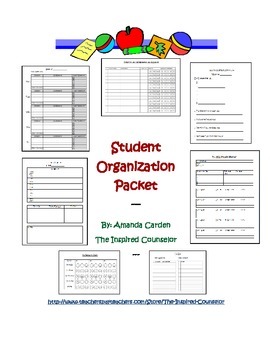
Another student I am working with is a 5th grade girl who struggles with self-concept and responsibility. I have worked closely with her to help her with organization skills. She, like many kids, wants to put big projects off until the very last minute, which usually results in a late night cram session and quite a few tears shed. I designed a "Big Project Planner" to help her break down big projects into smaller tasks to work on each day. I am also starting her on a "progress card" for her to take responsibility for certain behaviors and attitudes that she has.  Also, to help her increase her self-concept, I am teaming up with her teachers and parents to really bring out her strengths and make a point to tell her any strength that I see in her.

(Click on the pictures to be taken to my TPT store!)
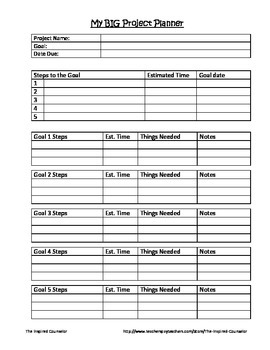
My BIG Project PlannerStudent Organization Packet

3. Learning does NOT have to be boring and should NEVER be boring!

Worksheets can be a time saver for teachers, but they can be a time waster for students. I DO NOT like to use worksheets and avoid them at all costs! For homework, worksheets can be a great tool to review materials independently, but when working with  a teacher I believe it's best NOT to use them. When I'm tutoring, I will create fun games to teach and review topics. For example when completing math problems or reading sight words, I might pull out a Tic-Tac-Toe board or a Connect 4 board. For each problem answered, they get to have a turn. I also have file-folder game boards, PowerPoint games, and even basketball games (using my indoor hoop). When students are having fun, they are learning. With my more creative and artistic students, I will sometimes have them create a Lapbook of the concept we are discussing.

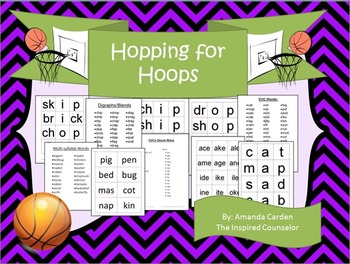
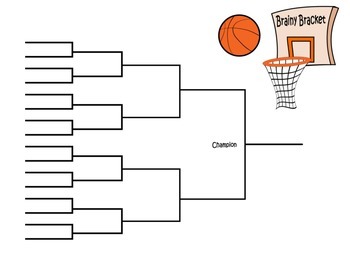
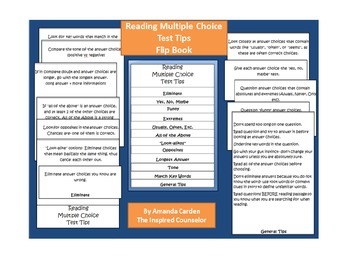
Below are a few games and activities that I have posted on my TPT store:
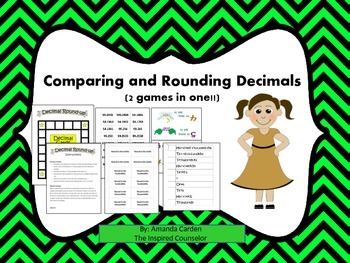
Comparing and Rounding Decimals Games Hopping for Hoops- Decoding Activity
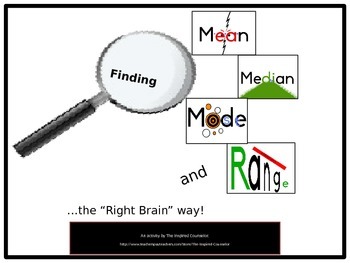
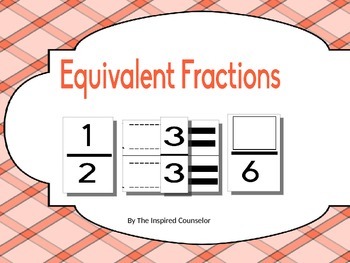
Brainy Bracket: A March Madness game for multiple subjects!Reading Multiple Choice Test Tips for Flipbook"Right-Brain" Mean, Median, Mode, and RangeEquivalent Fractions Hands-On Activity
4. There's more to learning than just learning. 

I sometimes ask my students what they think about different subjects, like reading for example. One student would always say that he HATES reading. The counselor in me then gets him to reframe that "garbage" thought into a "recycled" though. Instead of saying "I hate it", they can say "It's hard for me but I am learning." Often times, students come to see their academic difficulties as a direct reflection of their value as a person. I want my students to know that there is more than just academic success, and I will make a point to describe several of the student's strengths. We might have a conversation about why it is important to learn XYZ, and how it will help them in the future if they learn it now.

Now that I am seeing tutoring through the counseling lens, counseling opportunities with my students are popping up all over the place! Sure, I mainly tutor reading and math, but I also teach self-esteem, self-worth, and self-discipline. I use Solution Focused therapy and CBT on a regular basis during tutoring. I work with families on the best way to support their child. I may not have a school to counsel at yet, but I sure am using my school counseling skills when I am tutoring! Once I do get a school counseling job, I will be able to further incorporate academics into everything that I do with my students.

If you are interested in becoming a tutor, 
check out my Tutoring Forms Pack from my Teachers Pay Teachers Store! 
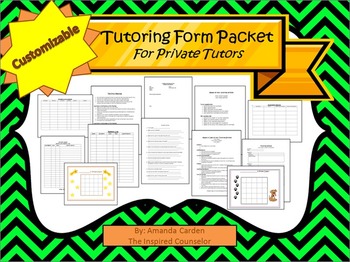
Tutoring Forms Packet for Private Tutors

Sunday, April 21, 2013

Career Exploration Lessons- Webquest

This month we have been focusing on careers. I wanted to do some type of self-exploration activity with the students where they learn a bit about themselves and find careers that match their interests/personality. Initially, I was hoping to find a webquest of sorts for the students to explore, but was not able to find anything age appropriate that I liked. There were a few great websites, but none that had everything I was wanting to cover. Instead, I decided to create my own mini-webquest. I have included powerpoint presentations that I have created, as well as a worksheet to go along with the websites. All of the links are listed below. I hope that other school counselors will be able to use some of these resources to help your students explore careers!

Lesson 1: Introduction to Careers- why people choose career (30-45 minutes)
PowerPoint Presentation

On day one talking about careers, we discussed the definition of a "cluster" (relating it back to the career clusters), discussed why adults work, and how they choose their jobs. The students then created a story by entering a few words about what they like or enjoy doing, using this site. Below is a sample story made by this site! There is also a printable story where students just write in the words.
 Lesson 2: Career Exploration (45-60 min.)

Each student received a worksheet to guide them through this "webquest". As a review of the previous lesson about choosing careers based on interests and personality, the students started by learning their "Holland Code" by using this quick assessment from GetReadyforCollege.org. In this assessment, students simply check the box next to the things that interest them. Once they submit, they are given a score for each of the 6 Holland Codes. After students have learned what their Holland Code is, we discussed as a class what each one meant, and what kinds of careers people with those personalities would typically like. 

Next, students searched using Paws In Jobland for jobs related to their interests. They were to choose three jobs that are most interesting to them, and write down why they would be a good fit for those jobs, based on interests/personalities. 

Once a teacher verified that they had completed the search site, they could go to VA Career View to explore more careers through games and activities.  


Career Links:
Lesson 1:
Lesson 2:


Saturday, February 16, 2013

Simon's Hook: A Story About Teases and Put-Downs Lesson Plan Ideas

With the third graders, I did a unit on Simon's Hook. There is so much that can be done with the book! Simon's hook is a story about how to deal with teasing and put-downs. When Simon has a bad hair day and someone calls him a name, he gets very upset. Grandma Rose then tells Simon a story about how to handle teases and put-downs, from a fish's perspective. When someone teases you, they are throwing you the hook. When you get upset, you are biting onto their hook. Grandma Rose helps Simon learn how to "swim free" from the teasing hooks that people toss his way.


Youtube Videos

Grandma Rose's Neighborhood Youtube Videos: As a review of the book, or even in place of the book, show these videos to the class. Part one has the intro about how teasing is "throwing a hook". Part two is the story about how the fish learned to swim around the hooks instead of biting. Part three shows some role plays about handling teasing.
Thumbnail
Grandma Rose's Neighborhood Part 1
Thumbnail
Grandma Rose's Neighborhood Part 2

Thumbnail
Grandma Rose's Neighborhood Part 3

Which Strategy is it?

After discussing the strategies of how to avoid biting the hook, we played a little class game. I wrote each of the five strategies on the board. After another student reads the scenario, the class would show me with their hands which number they think the scenario is an example of. Below are the scenarios that I used.

Ignore
The whole class is about to play kickball. Sam says to the Dustin, “We’re gonna beat you guys!”. Dustin looks at Sam and shrugs, thinking to himself, “I really don’t care if they win”

Amy and Sara are playing checkers when Matt approaches them and says to Sara “Your mom is fat”. Amy and Sara continue to play checkers as if nothing had happened.

Agree
Patrick is telling a joke to his friends. “Knock knock!” (who’s there?) “Interrupting Cow!” (interrupting Co-) “MOO!!!”. Chris looks at Patrick without laughing and says- that was a dumb joke. Patrick says “yeah, it sure was!”

Distract
While playing dodgeball, George says “Ha ha you missed me!”. John responds by saying “what I really miss is my X-box. Man I would love to be at home playing that now!”

Laugh/joke
Josh just got finished telling a story to his friends about embarrassing himself this weekend with his family. When he was finished,  Jason said, “wow. Really? How dumb can you honestly be to think that would work!” Josh responds by saying “well, you’d be surprised just how dumb I can be sometimes”

Stay away (avoid)
Kelly started calling Sharon names on the playground. Sharon decided that she’s had enough of the name calling, so she decided to turn around and walk in the other direction from Kelly. 

Role Plays

Students were divided into groups of 4 and were assigned one of the 5 strategies. They came up with a short role play of a situation where a kid used that strategy. While presenting to the class, the other groups had to figure out which topic each of the groups had chosen. 

Game Time!

This is an activity that I saw on lifelessonsforlittleones.com. There is a ship at the top of the board that has a teasing remark, "You're a little shrimp!". There are a lot of fish cards in a pile that have responses to that statement. If the statement is one that "bites" the hook, it is place on top of the baited hook/strings. If it is a statement that helps the fish avoid the hook, they are place on the side with "Free Fish".

Take Away!


At the end of the unit, each of the students received one of these cards to remind them of what they can do to avoid "biting the hook".

Other Activities: 

  • http://www.freekidscrafts.com/handprint_fishing_pole-e1236.html Give each kid a hand cutout, fishing pole, string, and two paper fish. Have kids write a teasing comment on the pole or hand cutout. On one of the fish, write a comment that would be considered "biting" the hook. Glue this fish to the string. On the other fish, write a comment that would represent the "free" fish. 


Saturday, February 2, 2013

Classroom Behavior Management

At my internship, guidance was a part of the Specials rotation. One thing that I focused on was how to effectively manage the most "energetic" classes. In my Master's program, we are not taught how to manage a classroom as a school counselor. I was an Education major during my undergraduate days, but the discipline that is appropriate for a classroom teacher may not always be appropriate for a school counselor to use. This has been a growing experience for me, leading me to look for alternative ways to manage a classroom effectively. Below are some ideas that I have tried, and some ideas that I have found on Pinterest that would be easy for a school counselor to implement in a classroom.

1. Mr.Potato Head-  I have used this as a visual for whole body listening. At start of a classroom guidance
or small group lesson, discuss what ears, eyes, mouth, hands, brain (hat), and bottom should be doing, adding body parts as you discuss. If you notice that kids are not using their body appropriately during the group or class, remove that part of Mr.Potato head. Replace when you have everyone's attention again.

At the end of class, if Mr.Potato Head has all of his parts, give the class a compliment when their teacher arrives to pick them up, or another agreed upon incentive (see below). For smaller groups, you could pass around Mr.Potato Head at the end.

2. Counselor versus Students game- Draw a T-chart on the board, labeling one side "counselor" and the other side "students". When students are actively participating and using whole body listening, the class receives a point. If the counselor is waiting on students to finish conversations, or is not feeling respected by the class, the counselor receives a point. The objective is for the class to have more points than the counselor. 


3. Erasing letters of a word- Write the one-word topic of the lesson on the board at the beginning of class. If class is speaking out of turn, not following directions, or disrespecting teacher, erase a letter. The objective is to still have a part of the word left on the board at the end of class. 

4. Building a word- Similar to the erasing letters of the word, the class must work together to build the vocabulary word by showing positive behaviors. The objective is for the class to build the entire word by the end of class.

5. Bucket Fillers- Introduce this using the book, "Have You Filled a Bucket Today?". Remind the students throughout the class to think about if they are filling your bucket, and/or filling another student's bucket.

6. Peace Makers- Introduce by talking about peace. Discuss ways to make or break the peace in a classroom. Create an anchor chart with things that are "peace makers", and things that are "peace breakers". Through the lessons, remind the class to be peace-makers, not peace breakers. (Click picture for source)

7. Mystery Person-  Before each lesson, pick a Mystery Student to watch for. Do not tell the class who the mystery person is. To redirect students during the lesson say, "I wonder if my Mystery Student is on task!"  If the Mystery Student follows the “rules” they receive a reward of some kind. If the Mystery Student does not follow the rules - a brief, vague discussion is had with the whole group about what we should be working on to earn "Mystery Student". Source: Growing Kinders Blog

8. Class Bingo- Use a BINGO board for each class, and a bag with the individual spaces listed or bingo balls- (ex. B3, N5, G1). If the class is following directions and being respectful, choose a student to randomly pick a number from the bag, and color in that spot on their class BINGO board. When class gets an entire row of numbers filled in (horizontal, vertical, or diagonal) the class will receive a special reward/party.

9. Marble Jar- When you catch your class doing something really well, add a marble/pompom to the jar. The objective is for the class to fill the jar to a certain point to obtain a class incentive. 

10. Quiet Critters- Quiet Critters are Pompoms with googly eyes and felt feet. They only appear when students are being quiet. Each student receives a quiet critter when they are being quiet, but have to turn in their quiet critters if asked to stop talking. Source: Teaching Chick Blog

Counseling Classroom Incentives:
  • Game day (Teambuilding, following directions)
  • Minute to Win It games (builds on teamwork skills)
  • Feelings charades/ Onion Head cards (identify feelings, building empathy)
  • Brain Breaks for extended amount of time
  • Compliment to teacher
  • Students enter drawing for special seating during classtime
  • Pass around a puppet friend
  • Share individual stories at end of class

Tuesday, January 29, 2013

Play Therapy in Schools

I've recently had the privilege of speaking to a Counseling Children class at my university about the practical uses of play therapy in schools.Play therapy is often viewed as something that only clinical counselors can do. It's seen as being too time consuming and a poor use of a school counselor's time. These statements, however, could not be further from the truth!

Imagine that someone in an authority role came up to you and started asking you to do something in a language that you could not understand or comprehend. You most likely would not know what to say in response, and would be at a loss of what you were expected to do. Using talk therapy with children can sometimes come across this way too.

Play is a child's first language. Using play therapy allows the child to express themselves in an alternative, more comfortable way. Children learn about their world through play, and are able to manipulate their world on a smaller scale to work through their own issues. We have been taught to meet the children where they are. If they are most comfortable in speaking "play", why should we not meet them where they are?

As stated by Blanco and Ray in their article, Play Therapy in Elementary Schools: A Best Practice for Improving Academic Achievement,  “Play therapy allows child to overcome emotional limitations that were hindering expression of intelligence and released the child to demonstrate full potential (2009).” Play therapy helps kids succeed academically by helping to remove emotional barriers. 

So, how can you use play therapy as a school counselor, and still keep your sanity?? Below are some ideas!

Puppets
  • Interview puppets about child
  • Make up stories with puppets 
  • “impulsive puppy”- Classroom puppet who teaches students how use whole body listening
  • "Which puppet are you? Why?" 
  • Create your own puppets
    • Finger puppets - cut tips off cheap gloves, attach googly eyes, yarn hair, construction paper  (or felt) clothes
    • paper bag puppets- decorate with markers, lightweight materials
  • Puppet shows
    • Shy students can hide behind puppet theater
    • Have student puppeteers present to classes on important issues
    • Introduce new topics to class using puppet shows
    • Shoe box for finger puppets, trifold board or turned over table to bigger puppets
Play Dough
  • Create a feeling using dough - what does sad look like to you?
  • Make yourself from dough - what do you like about yourself? What, if anything, do you wish you could change?
  • Take out aggression- punch, squeeze, hammer, etc
  • Energy outlet while talking- gives hands something to do while mouth does the talking
Sand Tray
  • Create your world - who is in your world? what are they doing?
  • Make a story - tell me a story about a time when you ___.
  • Who do they introduce? Do they leave out anyone seemingly important? Where are objects placed in relation to one another?
  • Ask questions - why did you choose a __ for yourself? How does that make (sand tray character) feel?
  • Suggest changes (what would happen if…)
Games
  • Social skills - taking turns, patience, being a good sport, following the rules
  • Get-to know you games 
    • connect 4- for each token you drop, say one thing that you like
    • Jinga - put talking prompts on each wooden block, answer prompt as the block is chosen
    • Uno- assign color cards to prompts
Expressive Arts
  • Drawing- 
    • Draw your family doing something 
    • Family accolades- who is the happiest? is anyone sad?
    • Draw a time when you felt… 
  • Color your life- feelings assigned to color
    • ex. pizza- cheese= yellow= happiness. Pepperoni= red= Anger.
  • Zentangle- relaxation, concentration (http://www.zentangle.com/)
  • Music- give or create instruments 
    • What does sad sound like? 
    • How angry did that make you?
Other Play Techniques
  • Play house - who is there? who is not? what happens in each room, etc
  • Toss ‘n Talk ball individual or group prompts
  • toss ball while talking (great with boys)
  • Mask collage
    • outside- what you show the world
    • inside- what are you hiding from the world
  • Shared Drawing- if drawing with a child, ask what and how you should draw.  
  • Narrative (create story of life) 
    • large sheet of paper, draw big events of life, walk through and talk about each event
  • Basketball hoop in office- talk while shooting hoops! Or answer prompts to shoot the ball x number of times.