Search This Blog

Showing posts with label PreK and Kindergarten. Show all posts

Monday, May 6, 2013

Technology for School Counselors

We are living in a technology-infused world. For the counselors and educators out there who have embraced the many benefits of using technology in the schools, the possibilities are truly endless!
Below are just a few of the possible ways that school counselors can use technology to make their school counseling program more efficient and more beneficial for the entire school! 


Counselor Organization
  • Google calendar- scheduling at a glance
  • Google docs- surveys and forms, share documents, spreadsheets
  • Individual Notes- (careful to ensure student confidentiality!)
  • Keep track of parent contacts
  • create charts and graphs for accountability 
  • Dropbox- Instead of filing cabinets full of papers, keep resources at the click of a button!

Individual/Group counseling

Classroom Guidance

School-wide

Other

Saturday, April 27, 2013

End of the Year Closure Lessons

This week was very bitter sweet for me, though more sweet than bitter! I have now finished my school counseling internship and will be graduating in just two weeks! This week consisted of tying up some loose ends with individual students and saying my good-byes to groups and classes. Below are some of the closing/termination activities that I did with my students, and some that I didn't do but wanted to share anyways. I hope you enjoy!

Individual

  • Paper Finger Puppets- Found on the blog Seven Thirty Three, I taught some of my younger students how to make these very simple puppets. A lot of my individual work with the younger students has involved puppets. As a final individual session, we both made a paper finger puppet and used it to say goodbye. The students absolutely LOVED it! And it gave them something to take with them to remind them of our time together. 
  • Writing notes- Before I left for the year, I wrote several of the students personalized notes emphasizing their growth over the school year, and included some empowering words to encourage them to continue to work towards their goals. 
  • Bridge- Have the student draw a bridge in the middle of a sheet of paper. One one side is where the student used to be, and on the other is where he is now. Under the bridge- what obstacles did you have to overcome? This can also be done with two bridges, with the last one being where you would like to be, and what obstacles you might have to overcome to get there. This activity can be used at the beginning of counseling as well to give direction to the sessions. 
  • Letters to the past/future you-Have the student write a letter to him/herself in the past or the future. If you could time travel to the past/future what would you tell yourself?
  • Lines of Feelings. Ask the student to draw a line that represents their feelings over the past (year, month, week, etc). All of the lines will vary, but usually the jagged or rough lines in red or orange are used to signify anger or discontent, and the smooth, flowing lines in blues and greens are usually used to show calmness and contentment. After the lines are drawn, the student can expand on them by writing about what the lines represent, how it feels to draw them, or to whom or what they are directed.  

Groups
  • Flower Petals- The flower represents the group growing over time. A flower starts as a bud, and you can not see the petals yet. But over time, with water and sun, the petals begin to unfold, creating a beautiful flower. Place a circle in the center of the group, and tell them that this represents the bud, before group began. There were many things that you know now that you didnt know before. Give each student a paper flower petal, and say one thing that they have learned from the group. Have the student symbolically tape the flower petal to the circle. Continue until everyone has done this. 
  • String tying- From Diane Senn's book Creative Approaches to Counseling Individual Children. I used this at the end of my fourth grade girls friendship group to help remind the girls that it is okay to ask for help when they have problems, and that your friends are often a great source of help. Start by giving each girl a string that is at least one foot long. Tell them to tie a knot in a string. This is pretty simple for them to do. Some problems are easy to handle yourself. Then, instruct them to hold both ends of the string without letting go and tie a knot. Tell them that it is okay to ask for help. After letting them try for a few minutes, ask them if they would like some help. Ask one student to cross her arms, then hand her the ends of the string in each of her hands. Have her unfold her arms without letting go of the string, and a knot will be tied in the string. Allow the girls to help one another with this. Tell the girls that sometimes we have problems that we are not sure how to fix, and it is okay to ask someone else for help, and sometimes it takes a creative solution to solve their problems. Friends help us get through some of the tough problems we have, but when friends cant help, your school counselor is still there for you. 
  • Choose a Picture- Print out a variety of different pictures, such as animals, scenery, symbolic pictures, people, etc that represent a variety of emotions and different points of view- both positive and negative. Lay the pictures out on the floor and ask students to choose the picture that shows how they feel, what they will take away from the experience/group. Process what the picture chosen means to each individual. This site does a great job of explaining this method of closure. 
  • Group Puzzle/Mandala- Give each student a piece of the puzzle or a piece of the mandala and let each student decorate it. At the end, let each student symbolically place their puzzle piece or mandala piece back into the puzzle, saying one thing that they have enjoyed or have learned during the group. Allow students to keep the finished product in their class to remember the good times together.
Classroom
  • The Giving Tree- I wanted to incorporate a finger-print tree into the lesson somehow, and my supervisor suggested I use the The Giving Tree with it. That got my wheels turning! I used the book with first grade and up, adjusting the lesson slightly to accommodate for developmental differences. Before reading the book, I asked the students to be thinking about who they can relate to more- the tree or the boy. I then read the book to the class without stopping for inserting my own interpretation of what was going on. After I read the book, I asked them again who thinks they are more like the tree or more like the boy. In most classes it was about half and half. I let a few students explain why they thought they were more like one or the other. Then I told them that sometimes I feel like both. I feel like the tree because as a counselor, I will gladly give my students anything and everything that I have to help them when they need it. But at times, I have felt like the boy, and the students were the tree. In the same way that the boy got what he needed every time he asked for it, I got what I needed to become a school counselor from the students. I told them that they have taught me so much more than I have taught them this year, and thanked them for helping me learn how to be a school counselor. At the end of the lesson, I let each student come up and put a finger print on the tree, using a washable marker. (In later classes I decided to just have them write their names on the branches in different colors). I then wrote a note to the class and gave it back to them to keep in their classroom to remember our time together, and to remember that it's okay to be like the tree AND like the boy. 
  • Toss 'n Talk ball- For some classes, the students had many questions for me about why I am leaving and what I would be doing after I'm gone. After answering a few questions, I got out a inflatable ball and asked students what their favorite memory with me was this year, in 2-3 words. I used the ball as a talking tool- only the person who has the ball can talk. I gave each student a turn to catch the ball and say a favorite memory. 
  • Class Rap- I did not do this one, but it was my back up. The students are finishing up a poetry unit, so to incorporate this, I was going to have the students write a haiku about what they will take away from our time together this year. After they wrote the poems, we would all sit in a circle. Depending on the age and ability, I would divide the class into 2-4 groups, and give each group a rhythm to clap to a given beat, and maybe even having a student being our "beatboxer" to be our percussion. Then one at a time, students would read their poems in rhythm with the class's beat. 
  • Empowering Words- Adapted from Kellybear.com-  Close the year out with some positive and encouraging words! Have students think about some thoughts that help them feel better when they are feeling sad.This is called positive self-talk. Brainstorm thoughts that can help on the board. After the class is brainstormed out, have them choose one statement that is meaningful to them and draw a picture about it. Allow time to share. Remind kids that even though they may feel sad about things (such as a teacher/counselor intern leaving them, or something else sad), they have the power to control their thoughts and can think about these things to make them feel better. Leave with encouraging words challenging them to be their best! (These positive self-statements could make a nice end-of-year bulletin board!)
  • Paper Quilt- have each student draw their favorite memory from the year on a square sheet of paper. Tape the pictures together, or put into a gallon-bag quilt format to display, like the one here


Tuesday, March 5, 2013

Butterfly Diversity PK/K Lesson


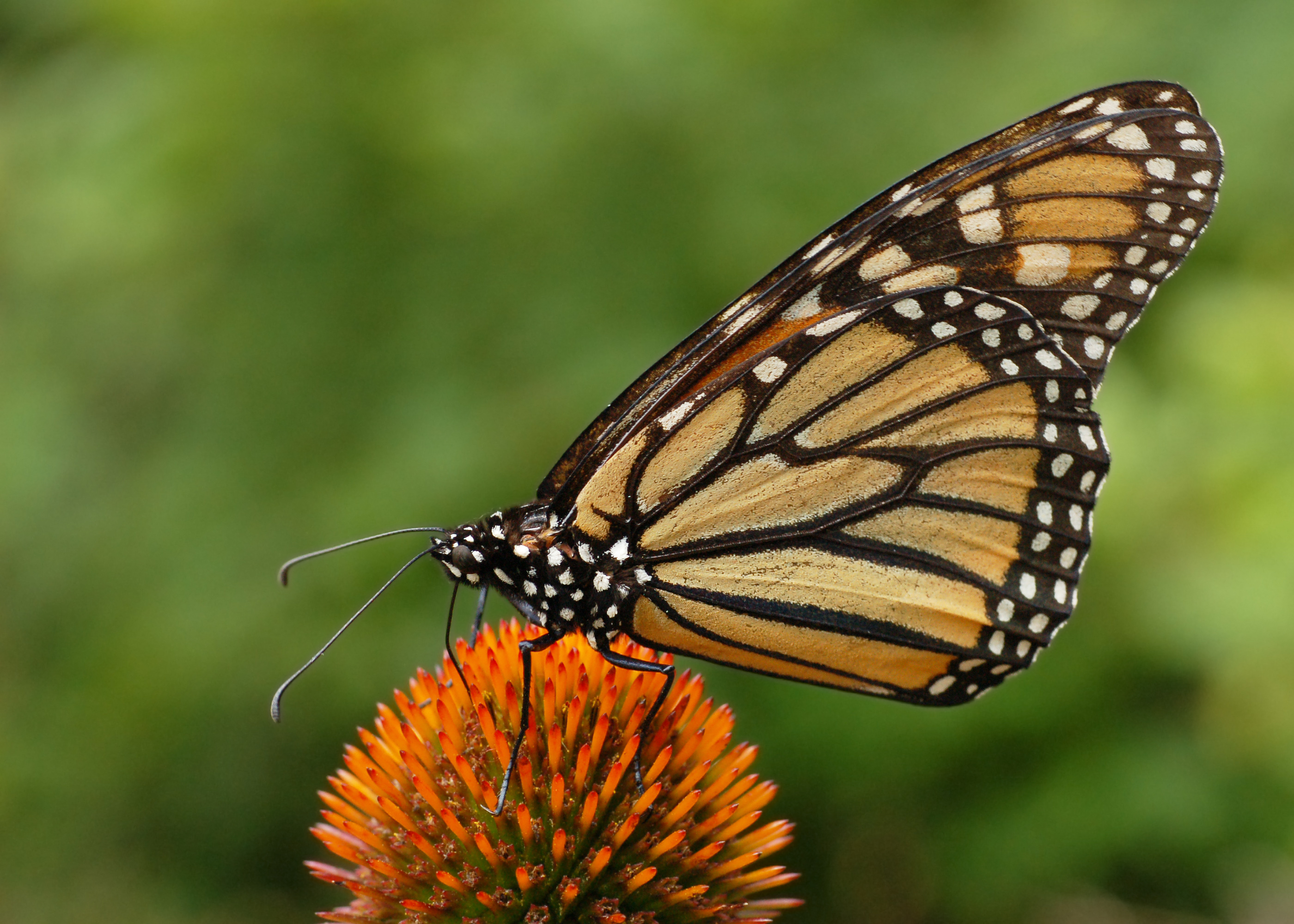
File:Monarch Butterfly Danaus plexippus on Echinacea purpurea 2800px.jpgIntroduction:
Did you know that there are no two butterflies that are exactly alike? Even if they look the same, there are still very small differences. To begin this lesson, we compared pictures of different butterflies, comparing how they are similar and how they are different. The question was posed: is one butterfly better or more special than the other because of the design on it's wings? How are you like these butterflies? 

Activity:
Pass out crayons and paper butterflies for students to decorate (link for butterfly template is at bottom of page). I encouraged them to be as unique are they are and add as many colors as they would like. I also showed them how to make the butterflies "fly" without leaving their hands, which the students LOVED! Make sure to allow time for students to share their artwork at the end of the lesson!

Song:
There is also a really cute poem that goes along with this lesson. This is a great way of getting the students to come back together after having a few minutes to color their butterflies. I changed it up just a bit to make it fit with a tune to a popular song- I'm a Little Teapot. (This is NOT my original poem, but I can not recall who to give credit to! 

I am very special I am neat (hug self)
From the top of my head to the bottom of my feet (hands on head, hands on feet)
We are all unique and that's okay (palms up, sweeping from left to right to "include class")
We're all like the butterflies (make butterfly out of hands, or make paper butterfly "fly")


Thursday, February 14, 2013

Diversity Lesson- The Crayon Box that Talked Lesson

I taught a lesson on diversity to a class of PK/Kindergarten students.


Introduction:
Introducing the topic, I opened a box of crayons, grabbed a handful and laid them out in front of me on the floor so that everyone could see. Next, I asked students how these crayons are different. I got the expected responses: different colors, some are longer than others, some have paper and others don't, etc. I then asked the class how the crayons are the same. One kid said that all the crayons do the same thing. Another pointed out that they are all called "crayons". I added that the crayons all go back into the same box when we were through.

Story Time!
I then read the story, "The Crayon Box That Talked" by Shane DeRolf. This is a book about a box of crayons that do not get along with each other. In the story, a girl buys the box of crayons and takes them home to draw a picture using every single one of the colors in the box. By doing this, the crayons all start to realize that they each have something to give that is different from every other crayon in the box! We talked about what it meant to be "unique" and discussed how each student in this class is unique, just like this box of crayons. We talked about a few ways that we are different from one another, and about a few ways that we are the same as everyone else. 

Activity:
To really drive this message home, I told the class that we were going to make a puzzle as a class! I created a puzzle using a file folder and numbered each of the pieces to make putting it back together easier. (Plus, the kids can practice their counting skills!) I gave each student a piece of the puzzle to decorate with crayons however they would like. The teachers also helped color a piece.

Conclusion:
Once everyone was finished, I taped all of the pieces together. Each person's unique puzzle piece came together to create this beautiful class puzzle! No two puzzle pieces are alike, just like no two kids are alike. The class now has this puzzle displayed in their classroom to remind students that they are all unique! 


(Click the images below to be taken to my Teachers Pay Teachers store and purchase this lesson!)